Mergers and acquisitions (M&A) in Vietnam are not only about ownership transfer or business expansion.
Debt and financial obligations in M&A need to be understood before the parties agree what the buyer is paying for and how completion will work. A loan balance is only one part of the picture. Guarantees, security, unpaid contractual amounts and disputed claims can affect the transaction even where they do not appear as a simple borrowing figure in the deal presentation.
The first task is to identify the debtor, creditor, source of the obligation and proposed treatment. The second is to distinguish an allocation of cost between buyer and seller from a change that is effective against the creditor. This article explains how to connect that legal review with the debt schedule, transaction documents and completion arrangements in a Vietnamese deal.
If the target continues as the same legal entity after its shares are purchased, its existing debts should not be described as automatically becoming personal obligations of the buyer. The target's position, any buyer commitments and the transaction terms need to be considered separately. A change in ownership can still matter under financing or other agreements, so the review must examine the relevant documents.
For example, a lender may have negotiated provisions addressing a change of control. The question is what the actual agreement requires, whether the proposed transaction triggers it and what action is necessary. Do not assume that a debt remains entirely unaffected simply because the employing or operating company keeps the same registration details.
Where assets are being acquired, identify which obligations the buyer proposes to take on and how that proposal can be implemented. A statement in the sale agreement that the buyer will pay an amount does not by itself establish that the original debtor has been released by the creditor. A merger or consolidation also requires review of the applicable corporate succession rules rather than treatment as an ordinary contractual transfer.
Vietnamese civil law distinguishes transfer of a claim from transfer of an obligation. Under Article 370 of the Civil Code, transferring an obligation requires the creditor's agreement, subject to the stated restrictions. Identify the mechanism applicable to the actual step and any special rules, rather than using “debt transfer” to describe every change in a transaction.
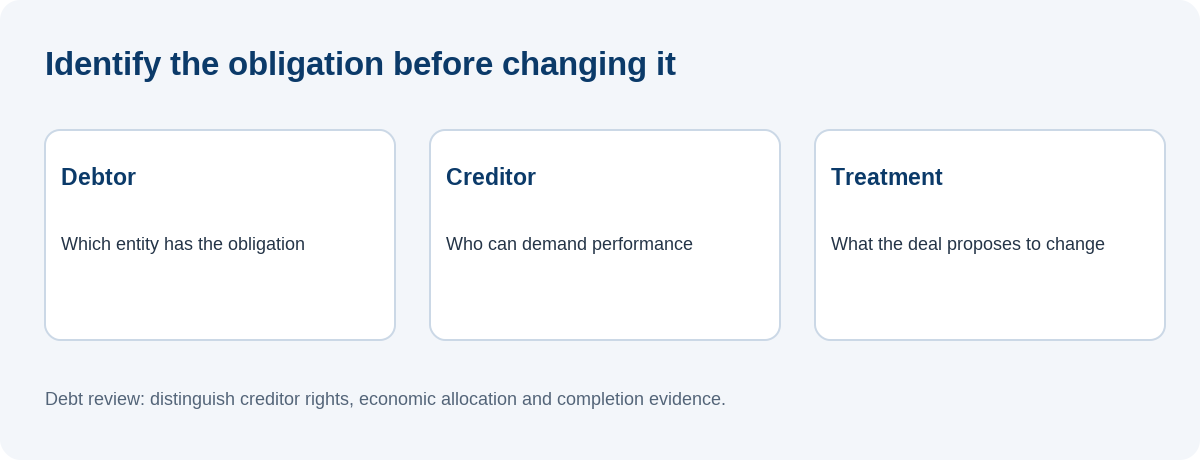
Reviewing debt and financial obligations in M&A requires a schedule that connects figures with evidence. For each material item, record the relevant entity, counterparty, agreement, balance date and proposed action. Distinguish principal, accrued interest, fees and other amounts where relevant. A total without a clear date or calculation basis is difficult to reconcile at completion.
Compare the schedule with financing agreements, amendments, repayment records and available confirmations. Explain differences rather than quietly selecting the most convenient figure. If a balance is disputed or depends on a future calculation, mark that status and identify how the parties will determine the amount to be used in the transaction.
Include obligations that sit outside ordinary bank borrowing. Shareholder funding, supplier arrears, customer deposits, unpaid purchase amounts and commitments under related-party arrangements may need attention. Their treatment depends on the facts and the agreed transaction mechanism. A label in the accounts does not replace analysis of the underlying rights and responsibilities.
The target may support another group member's obligations, or another entity may secure the target's debt. Map the relevant relationships and identify which arrangements the parties intend to retain or release. A business leaving a group can otherwise remain connected to liabilities that the buyer did not expect to manage.
Check the guarantee or support document itself, including the parties, scope and circumstances in which a demand may arise. Do not assume a seller's statement that an arrangement is “inactive” means it has ended. The proposed release needs to be supported by the documents and actions required for that arrangement.
Identify assets used as security and examine how that affects the proposed acquisition, financing or operation. The review should connect the secured obligations, security documents and relevant records. If the parties want an asset delivered without an existing security interest, establish the required release process before treating that result as available.
Other agreements may contain restrictions on disposal, additional borrowing or payments within the group. Review their relevance to the intended transaction and post-completion plan. A debt that appears manageable under the current business model may create a constraint when the buyer changes financing or disposes of an asset.
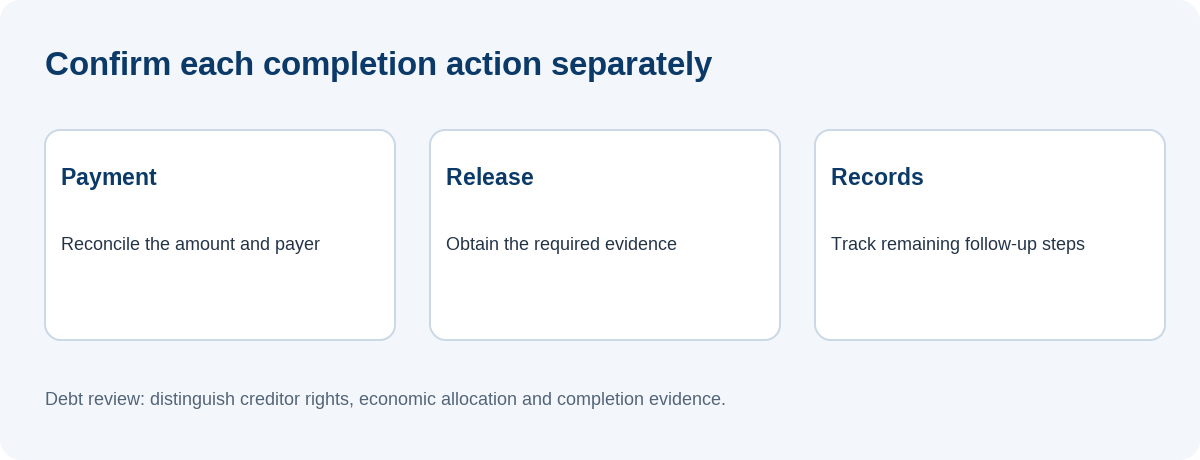
A practical difficulty with debt and financial obligations in M&A is treating these three matters as interchangeable. Paying a sum, receiving consent to the acquisition and obtaining a release can serve different purposes. Specify what the parties need from the creditor and what evidence confirms that each step has occurred.
Where repayment is planned at completion, obtain an appropriate statement of the amount required and consider how it changes with time. Identify the receiving account, responsible payer and treatment of any shortfall or overpayment. Payment instructions need a controlled verification process; a last-minute email should not be accepted without the checks agreed by the parties.
If security is to be discharged, establish which release documents and registration-related actions are needed, where applicable. Do not mark the release complete solely because the principal has been paid. The completion plan should show the connection between payment, delivery of evidence and the remaining administrative steps.
The transaction agreement should use definitions that match the intended economic outcome. If the price depends on debt, cash or working capital, explain how the relevant items are classified and measured. Otherwise, the parties may agree a headline price while disagreeing later about which obligations reduce it.
Avoid counting the same item twice or omitting it because it falls between categories. For example, the parties should agree how a particular related-party balance is treated rather than leave one team to call it debt and another to include it elsewhere. Worked calculations using the target's actual records can reveal ambiguity before signing.
Tax positions and possible benefits require their own assessment. Do not assign value to an assumed ability to use losses or obtain deductions simply because the transaction combines businesses. Identify the assumptions in the model and obtain the appropriate review before they become part of the investment case.
Known uncertainty about debt and financial obligations in M&A should lead to a negotiated response. Identify the issue, available evidence and potential consequences before choosing a condition, adjustment, undertaking or other protection. A broad promise that the seller will cover “all old debts” can leave important questions about scope and enforcement unanswered.
For a disputed claim, distinguish the claimant's demand from the amount the parties accept as payable. Preserve the relevant correspondence and explain the status accurately. The deal team needs to know whether it is pricing an established obligation, a contingent exposure or an unresolved allegation.
A legal due diligence review helps connect these items with the wider transaction record. Its findings should be translated into instructions for the negotiators and completion team. Merely recording a risk in a report does not decide who will fund, manage or resolve it.
Prepare a sequence showing which payments and documents must be exchanged together and which steps follow later. Confirm who may authorise a change if a creditor provides a revised figure or a condition remains outstanding. The team should not have to improvise the legal effect of a missing release while funds are already moving.
After completion, reconcile amounts paid, evidence received and obligations that continue. Transfer the relevant records to the people responsible for ongoing administration, subject to the agreed access arrangements. A well-negotiated transaction can still create avoidable problems if the operating team does not know which commitments remain in force.
Monitor post-completion undertakings using dates, owners and required evidence. If the parties agreed to resolve a specified claim or complete a release step, identify how performance will be confirmed. Keep the distinction between an expected outcome and a verified completed action visible in the handover.
For a focused discussion with Jurion & Partners, assemble the structure chart, debt schedule, financing documents and intended completion payments. Highlight guarantees, security and disputed items separately. That allows the review to address the actual obligations and proposed changes instead of relying on a single balance-sheet figure.
>>> Read more: Foreigners Divorce in Vietnam
>>> Read more: Custody of children in divorce disputes
Managing debt and financial obligations in M&A means knowing who owes what, what the transaction changes and which evidence confirms the agreed treatment. Keep the creditor's position, price allocation and completion actions distinct but connected. That discipline makes the financial commitments easier to evaluate and implement.






Subscribe today to get more breaking news from Jurion Partners - Solicitors & Litigators

108 Tran Dinh Xu St., Cau Ong Lanh Ward, Ho Chi Minh City, Vietnam
(+8428) 66.701.709 - (+84) 903.419.479
contact@jurionpartners.com
Follow us
Accept payment





 English
 Tiếng Việt