The demand for foreign labor has become popular due to the increase in foreign investment projects in Vietnam, the demand for services provided by foreign enterprises and the signing of treaties. In terms of trade liberalization, such as WTO, ASEAN, etc.
A work permit for foreigners should be treated as part of planning a lawful assignment in Vietnam, not as a document to obtain after the employee has already started. The employer needs to identify the real role, the form of work and the evidence available for that individual. Some workers follow an exemption route, while others require a permit. A visa, an overseas employment contract or a senior job title does not by itself answer which route applies.
Before asking the employee to collect certificates, write a short assignment summary. Identify the Vietnamese employer or receiving organisation, the proposed workplace, the duties, the expected start date and the relationship with any overseas employer. Explain whether the person is being recruited locally, transferred within a group or sent to perform another qualifying arrangement. These facts determine the legal analysis and help prevent the wrong application from being prepared.
The current general framework is Decree 219/2025/ND-CP, effective from 7 August 2025, rather than the superseded foreign-worker provisions of Decrees 152/2020 and 70/2023. Older guides can therefore contain obsolete approval sequences, forms and processing assumptions. The Government's explanation of the new rules identifies a combined employer explanation of labour demand and permit request. Employers should use the current procedure instead of copying an old two-stage workflow without checking it.
A project director in a commercial presentation may not have the same responsibilities as an executive recognised under the applicable rules. Ask the hiring manager to describe decision-making authority, reporting lines and technical duties in concrete terms. HR can then compare that description with the legal category and supporting evidence. Avoid changing a title simply to fit a perceived easier route while leaving the actual job unchanged.
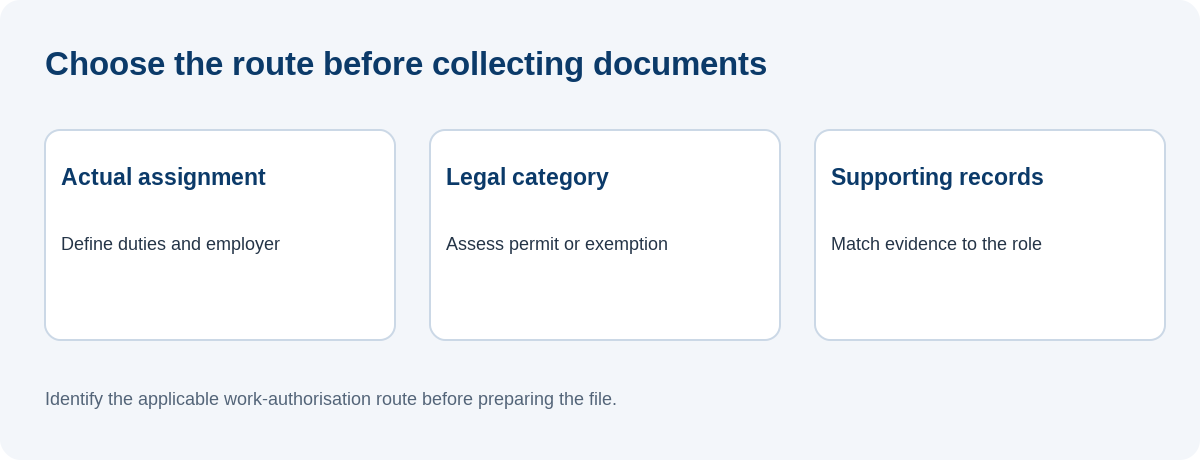
Do not assume that every overseas employee needs exactly the same application. Review the statutory exemption categories against the individual facts and evidence. An exemption from a permit is also different from an exemption from every administrative step. Depending on the category, a confirmation procedure or notification may still be relevant. The decision file should identify the legal basis and the action required before work begins.
Group ownership is a common source of confusion. A person who owns shares in an overseas parent is not automatically treated as personally holding the qualifying capital contribution in the Vietnamese company. Likewise, a short trip should not be classified as exempt merely because the visitor intends to stay for only a few weeks. Examine the nature of the work and the precise category instead of relying on labels such as “business visitor”.
Record who reviewed the case, what documents were considered and what assumptions remain unresolved. If the assignment changes before arrival, revisit that decision. For example, a person initially expected to attend meetings may later be asked to run a production team. The original travel description no longer provides a reliable basis for the work-authorisation analysis. A short internal decision note helps HR detect that change early.
An application for a work permit for foreigners needs evidence appropriate to the relevant category, not a generic instruction that every applicant must produce a bachelor's degree. Managers, executives, experts and technical workers raise different evidential questions. Identify the current requirements for the chosen category and check that the documents establish the necessary facts. A collection of impressive certificates can still fail to demonstrate the particular requirement that matters.
A useful experience record identifies the issuing organisation, the person's employment period and the work performed. Compare it with the proposed Vietnamese duties and investigate unexplained inconsistencies. If an employer has changed its name, preserve evidence connecting the names. Do not draft an inaccurate confirmation simply to reproduce wording from a checklist. The applicant and the issuing employer should be able to stand behind the record if clarification is requested.
Regulated occupations can involve professional conditions beyond general immigration or labour permission. The hiring team should identify these before offering an unconditional start date. A work authorisation does not necessarily replace a professional practising requirement, and a professional credential does not necessarily replace the work-authorisation process. Keep the different approvals visible in the onboarding plan and assign responsibility for each of them.
Review passport validity, identity details, health evidence and criminal-record documentation against the current procedure. Record the issue date, relevant validity period, formalities and expected filing date for each document. Collecting everything as early as possible is not always efficient: some evidence may become too old while other records are still being obtained. Sequence the work so that the final submission contains usable documents.
The Government's published explanation recognises specific conditions for foreign-issued health certificates and certain data-sharing or linked-procedure exceptions. A health certificate from any overseas clinic should therefore not be assumed acceptable. Criminal-record evidence also needs a current validity review. Ask which document is required for the actual route and issuing jurisdiction before the employee spends time obtaining a record that cannot support the filing.
Check the legalisation, certification and Vietnamese translation requirements for each foreign record, including any applicable exemption. Ensure that names, passport numbers and employer details remain consistent across translations. Keep a clear source-to-translation record and a final submission folder. If the worker renews a passport during preparation, assess which documents and application fields must change rather than allowing two identities to circulate through the file.
For a work permit for foreigners, confirm the competent receiving authority and published submission channel for the place and circumstances of work. Administrative responsibilities and electronic procedures can change. An old guide naming a former ministry or a particular local office is insufficient evidence of the correct filing destination today. Check the procedure before arranging an appointment or sending original documents.
Use the current application form and ensure that the employer's explanation is consistent with the role and evidence. Keep proof of filing and record the status of any completeness review. A statutory processing period is measured under the applicable procedural conditions; it should not be advertised as a guaranteed end-to-end service time. Overseas document procurement and responses to a lawful request for clarification need their own place in the schedule.
Under the general procedure described in the Government's guidance, the authority considers the labour demand and issues the permit within ten working days after receiving the complete application. A refusal must be explained in writing within three working days after receipt of the complete file. These decision periods should replace the old article's conflicting five-day and seven-day descriptions; they do not include time spent collecting or correcting documents.
If the authority asks for clarification, compare the request with the existing submission before preparing a response. Identify whether the issue concerns missing evidence, inconsistent facts or the legal classification itself. Keep the employer and employee informed about changes requiring their confirmation. Avoid sending revised duties or experience statements that conflict with previously supplied documents merely to achieve a faster result.
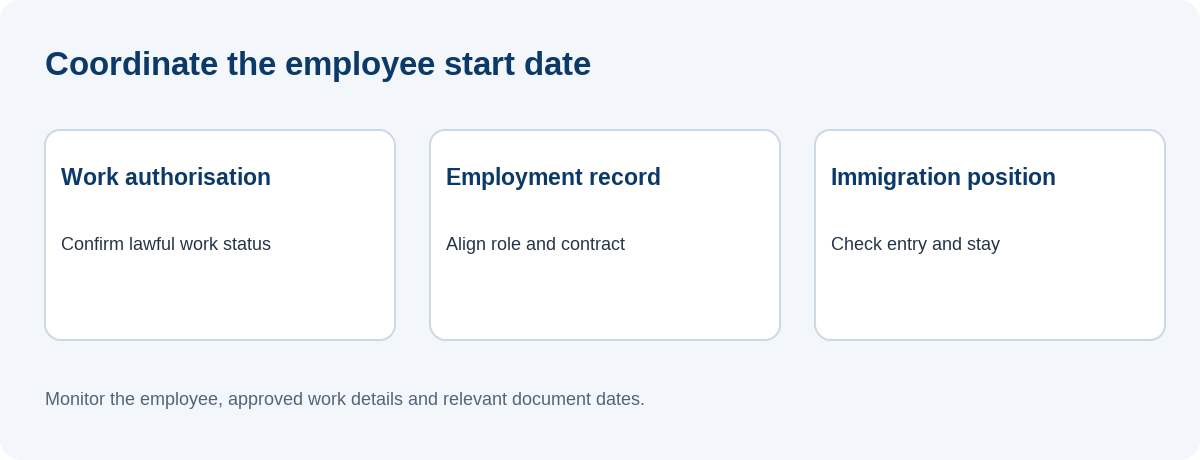
A work permit for foreigners does not independently resolve the person's permission to enter or remain in Vietnam. Check the visa or residence position separately and ensure that it supports the intended arrangement. Equally, lawful entry does not authorise the person to perform work that requires prior labour permission. Travel booking, accommodation and payroll preparation should follow a timetable that recognises both sets of requirements.
For the relevant employment-contract cases, Decree 219 requires a written Vietnamese-law employment contract after permit issuance and before the intended work starts. Contract drafting should therefore be coordinated with the authorisation outcome. Review the employer, duties, workplace and term together. The broader labour contract guidance provides the supporting employment framework; a permit application should not become a substitute for that review.
The Government's August 2026 guidance specifically addresses foreign employees on probation and confirms that the required work authorisation still matters. A proposal to let someone “try the role first” should be reviewed before any work starts. Keep recruitment interviews, permitted meetings and actual job performance distinct in the onboarding instructions. Commercial pressure to fill a vacancy does not remove the need to classify the planned activity correctly.
After issuance, retain the approved details in an accessible HR register. A new employer, different work arrangement or changed position can require a different procedure. The Ministry of Home Affairs' May 2026 response explains that changing the position or form of work while keeping the same employer can require a new permit under Article 20. Do not assume that every change is handled by a simple reissue or an internal letter.
Track expiry and review the conditions for any extension well before the assignment reaches its final stage. A continuing employment relationship does not automatically extend the document. When the worker leaves, check the applicable return, revocation or notification responsibilities and preserve evidence of the action taken. A complete file should explain both how the employee started lawfully and how later changes or departure were handled.
The most useful preparation combines an applicant-specific evidence list with named responsibilities and a realistic sequence. Ask the overseas worker to verify personal records, the hiring manager to confirm duties and HR to control the filing version. Resolve uncertain exemption or qualification issues before promising a start date. This reduces repeated document collection and gives the business a clearer view of what still prevents lawful commencement.
Where the employer needs support, Jurion & Partners can review the assignment description, available qualifications and proposed timetable together. Begin with those facts rather than requesting an assurance of approval. Advice should identify the applicable route, documentary gaps and dependencies that the company must address, without promising a result that belongs to the competent authority.
A reliable work permit for foreigners process connects the real job with the right legal category, consistent evidence and coordinated employment and immigration arrangements. Check exemptions first, prepare current documents and keep the assignment under review after issuance. The objective is a lawful, workable employment arrangement throughout the assignment, supported by records that the employer and employee can understand and maintain.






Subscribe today to get more breaking news from Jurion Partners - Solicitors & Litigators

108 Tran Dinh Xu St., Cau Ong Lanh Ward, Ho Chi Minh City, Vietnam
(+8428) 66.701.709 - (+84) 903.419.479
contact@jurionpartners.com
Follow us
Accept payment





 English
 Tiếng Việt