Review labour contracts in Vietnam against the actual working relationship, with clear terms on duties, remuneration and working arrangements, alongside supporting employment records and applicable legal requirements.
A labour contract in Vietnam should describe the employment relationship clearly and reflect the legal requirements that apply to it. The document is not simply an offer letter with additional clauses. It needs to connect the role, working arrangements and remuneration with the employer's actual practices. Both parties benefit when they can understand the agreed terms and identify how questions or changes will be addressed during employment.
The Labour Code No. 45/2019/QH14 provides the central employment framework. Under Article 13, the substance of a paid working arrangement involving management, direction or supervision can make it an employment contract even if the document uses another name. Calling an arrangement a consultancy does not, by itself, settle its legal classification. The actual working relationship needs to be assessed.
That distinction matters when a business decides which documents to use. A commercial services agreement and an employment arrangement do not necessarily address the same rights and obligations. Before preparing terms, establish who will perform the work, how it will be managed and what the relationship is intended to involve. The analysis should consider the facts rather than rely only on a preferred label.
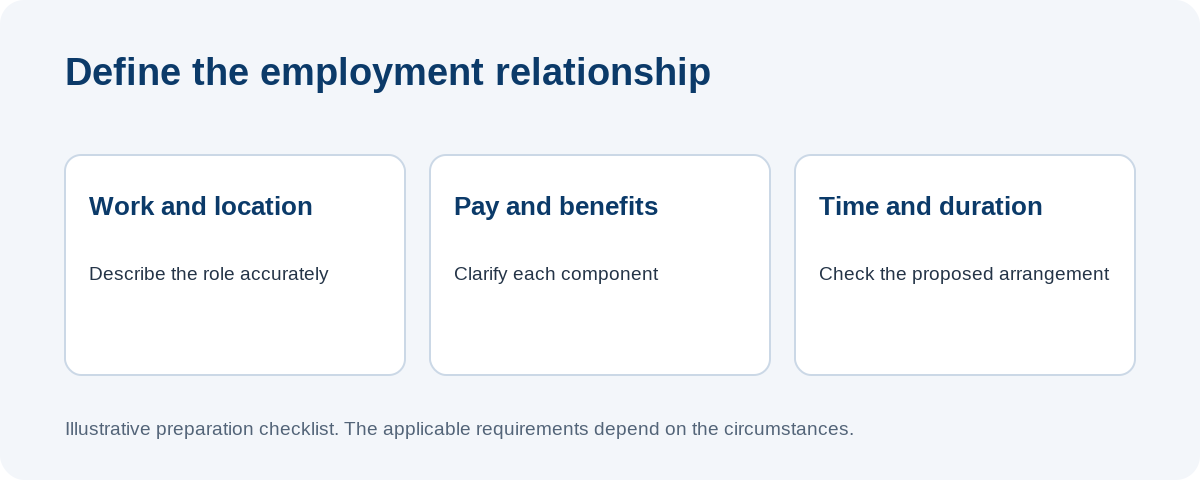
The Code distinguishes indefinite-term contracts from fixed-term contracts, with a fixed term generally limited to 36 months. Renewal and continued work after expiry require attention to the applicable rules and exceptions. A business should therefore track the history of the relationship rather than assume that a succession of new documents can be used without limit.
For a labour contract in Vietnam, identify the proposed start, duration and any prior employment arrangements relevant to the assessment. Consider the intended form and execution process under the applicable requirements. If probation is contemplated, assess how it will be documented and administered. A clause copied from another employee's file may not reflect the role, circumstances or current legal framework.
Check the employer's identity, the employee information required for the document and the capacity of the person signing for the employer. A group business may use several entities, and the company conducting recruitment may not be the intended employing entity. Resolve that question before issuing the agreement so that the document and payroll arrangements are aligned.
Foreign employees, younger workers and other circumstances can raise additional requirements or limitations. Identify relevant facts before settling the proposed terms. An employment contract should not be treated as a substitute for an assessment of work authorisation or other applicable conditions. The preparation process needs to identify which questions require a separate review.
The role should be understandable to the employee and the people managing the work. A job title alone may not explain the responsibilities. Consider the relationship between the contract, job description and any performance expectations. If responsibilities may evolve, the document should be assessed for a suitable approach rather than giving an unexplained power to change any aspect of the job.
Labour contract in Vietnam preparation also requires attention to the workplace arrangement. Identify the intended work location and any relevant travel, remote work or multi-site features. Explain the practical expectations and check how they relate to the legal terms. Informal assumptions about attendance or equipment can become a source of disagreement if they are not addressed before work begins.
Specify the remuneration components and the payment arrangements in a way that can be reconciled with payroll. Distinguish fixed salary from allowances, reimbursements and any conditional element. Where a bonus or incentive scheme is involved, identify its governing document and the matters that require further clarification. Avoid language that makes a discretionary payment look guaranteed, or a fixed entitlement look discretionary.
The proposed arrangement should be assessed against applicable wage, insurance and related requirements. Those rules can depend on the relevant time and circumstances, so a static template should not be treated as a current calculation tool. The business should understand the treatment of each component and maintain records that support the way the agreement is implemented.
If the employer offers benefits beyond the contract's main remuneration terms, explain where the relevant conditions can be found. A reference to a policy should not leave the employee unable to identify the applicable version. Check whether the policy and contract are consistent and whether a proposed change requires assessment. Clear records help both parties understand what was agreed and what remains subject to a separate scheme.
A labour contract in Vietnam should be considered alongside the actual working pattern. Identify ordinary hours, scheduling arrangements and any features that require further assessment. Overtime, rest and leave should be administered under the applicable framework rather than assumed to be resolved by a broad agreement to work whenever required. The employer's operational needs and its compliance process need to be connected.
Ask the people responsible for scheduling and payroll how the proposed terms will work. If the business operates shifts or requires travel, identify how those circumstances are recorded. The written agreement should support a workable process, and the process should provide reliable information about the employee's actual working arrangements. A mismatch can remain unnoticed until a payment or leave question arises.
An employer may need to protect business information or clarify rights relating to work products. The relevant clauses should identify the subject and fit the role. A general statement that all information is confidential may not explain the practical handling requirements. Training, access controls and document management can be as important as the wording of the contract.
Clauses concerning post-employment restrictions or ownership of materials may require specific assessment. Their effect should not be assumed from a foreign template or an agreement used for a different relationship. The employee and employer should understand the obligation being proposed and the facts that matter to its analysis. Avoid treating the existence of a signature as an answer to every question about legal effect.
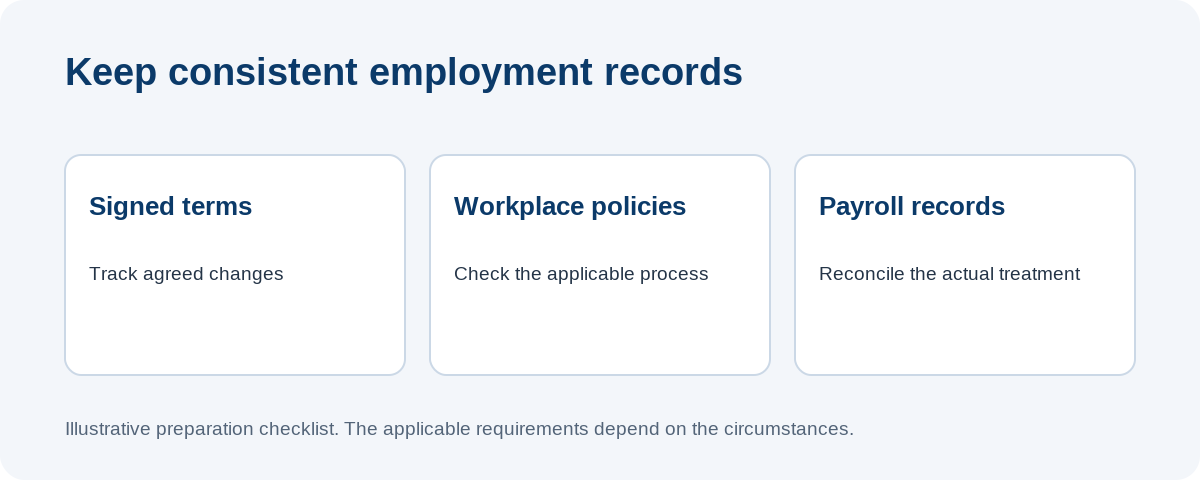
The contract is one part of the employment record. Internal rules, applicable collective arrangements and policies may also need consideration. Identify which documents apply and examine any inconsistency. An internal policy should not be assumed to override mandatory requirements merely because the contract refers to it. The legal effect and the process for adopting or applying a document need their own assessment.
For the policy workstream, see the guide to drafting internal labour regulations. The objective is to connect individual employment terms with a coherent workplace framework. A business should be able to explain both the employee's agreed role and the rules used to manage conduct, responsibilities and relevant procedures.
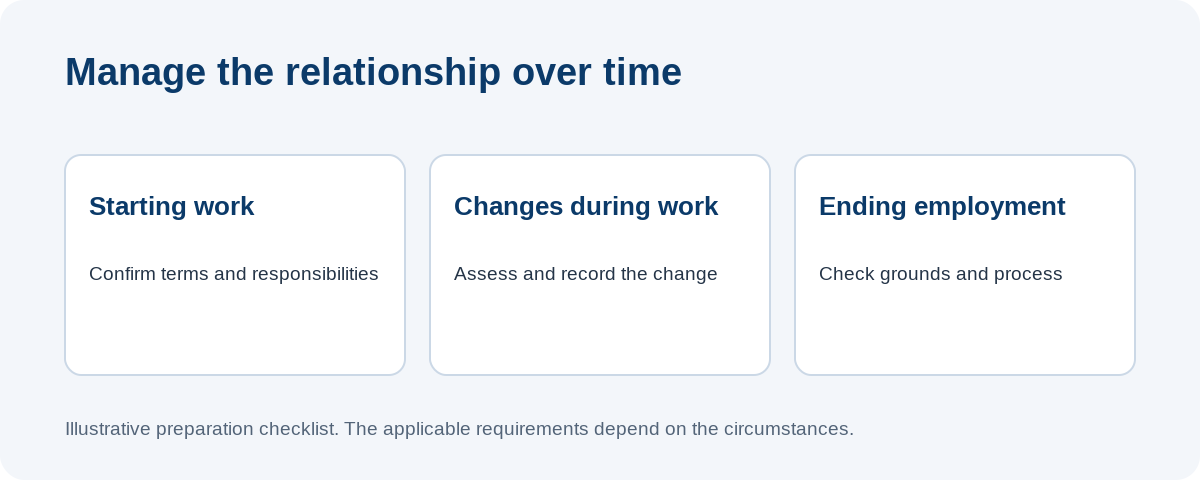
Labour contract in Vietnam management requires a reliable record of amendments and the circumstances that led to them. A change to duties, remuneration or working arrangements should be assessed before the business assumes that an email or revised job description is sufficient. Identify the applicable process and retain the documents that record the agreed or legally authorised position.
Track contract dates and other events requiring attention. Where a fixed-term arrangement is approaching expiry, allocate responsibility for reviewing the position in time. Do not leave the legal assessment until payroll discovers that the employee has continued working after a document's stated end date. Good administration brings the decision to the right people while options can still be considered properly.
The grounds and process for ending employment require a specific assessment. Notice alone should not be assumed to make every employer decision lawful. The reason, evidence, relevant documents and applicable procedure all matter. A contractual clause also needs to be considered within the legal framework rather than treated as an unrestricted right to end the relationship.
Plan the administrative handover as well, including work records, equipment, access and the matters that need financial review. Separate practical arrangements from any unresolved legal issue. If a disagreement exists, preserve the records and seek a focused assessment before making a decision that may be difficult to reverse.
A business discussing assistance with Jurion & Partners can prepare the proposed agreement, role description and relevant policies. Explain the employing entity, working arrangement and specific questions that need assessment. The scope can distinguish document drafting from payroll, work authorisation or a particular employment dispute so that the requested work is clear.
A useful review output identifies the clauses requiring a decision, the information still missing and the person responsible for confirming it. Keep that record with the final agreement so that the human resources and payroll teams can understand the arrangement. Where a material question remains unresolved, make its status explicit rather than allowing it to disappear during document formatting.
Before signing, confirm that the document reflects the intended arrangement, that material questions have been assessed and that the people administering it understand their responsibilities. Then maintain the signed terms and subsequent changes as a reliable record. A well-prepared labour contract in Vietnam supports a clearer employment relationship when it is implemented consistently as well as drafted carefully.






Subscribe today to get more breaking news from Jurion Partners - Solicitors & Litigators

108 Tran Dinh Xu St., Cau Ong Lanh Ward, Ho Chi Minh City, Vietnam
(+8428) 66.701.709 - (+84) 903.419.479
contact@jurionpartners.com
Follow us
Accept payment





 English
 Tiếng Việt