Mergers and acquisitions (M&A) are not only financial and strategic transactions but also complex legal processes that require careful planning and compliance with multiple regulations.
The legal advantages and disadvantages of mergers and acquisitions depend on the rights a transaction actually delivers and the obligations that remain afterwards. For an international business acquiring a Vietnamese company, an established operating platform may be valuable. That value should be tested against ownership evidence, investment conditions, material contracts and the practical ability to implement the proposed structure. A favourable description of a jurisdiction is not a substitute for that examination.
This guide considers the legal case for an acquisition from the perspective of an international buyer. It distinguishes continuity from unrestricted use, corporate ownership from ownership of individual assets, and contractual protection from guaranteed recovery. These distinctions help the buyer decide which issues need resolution before completion and which continuing responsibilities need an assigned owner.
The expression M&A covers transactions with different consequences. A purchase of shares changes ownership interests in a company; an asset purchase requires identification and implementation of the particular transfers. A statutory merger involves a corporate reorganisation. The documents and approvals should follow the actual structure rather than an informal label used during negotiations.
Under Article 201 of Vietnam's Enterprise Law, a statutory merger involves transferring assets, rights and obligations to the receiving company, with the merged company ceasing to exist following the prescribed registration. This is not a general rule that every share acquisition transfers the target's individual contracts directly to the buyer.
Start with a diagram showing the buyer, seller, target and any entities holding essential assets. Record which entity owns each relevant right before the transaction and where it should sit afterwards. This can reveal a missing transfer or continuing dependency before the parties negotiate detailed warranties.
A share acquisition may preserve the operating company rather than requiring every activity to be established in a new entity. Existing customer relationships, personnel and records may provide a useful platform. The buyer still needs to examine whether material arrangements contain change-of-control, consent or termination provisions.
For example, a long-term supply contract can support the investment case only if the intended operations fit its terms. The counterparty might have consent rights over ownership changes or restrict supply to particular facilities. The legal advantage lies in a verified continuing arrangement, not the mere existence of a signed document.
An acquisition can give the investor a defined position within an existing corporate structure. Assess that position through the company's constitution, ownership records and decision-making arrangements. The proposed percentage should be considered alongside voting rights, approval requirements and the interests of other owners.
A minority investor may value information rights and negotiated protections more than day-to-day operational control. A controlling investor may need an effective process for appointing management and approving budgets. State the intended decisions explicitly, then check how the legal documents support them.
A buyer can use the transaction review to identify gaps in records, policies and responsibility. After completion, better reporting and escalation may help management address issues more consistently. This is a management opportunity, not proof that legal duties have been reduced or historical non-compliance has disappeared.
Keep local requirements visible when introducing group procedures. A central compliance team needs reliable information from the operating business and a clear route for local advice. Replacing several local checklists with one group document does not establish that every applicable obligation has been covered.
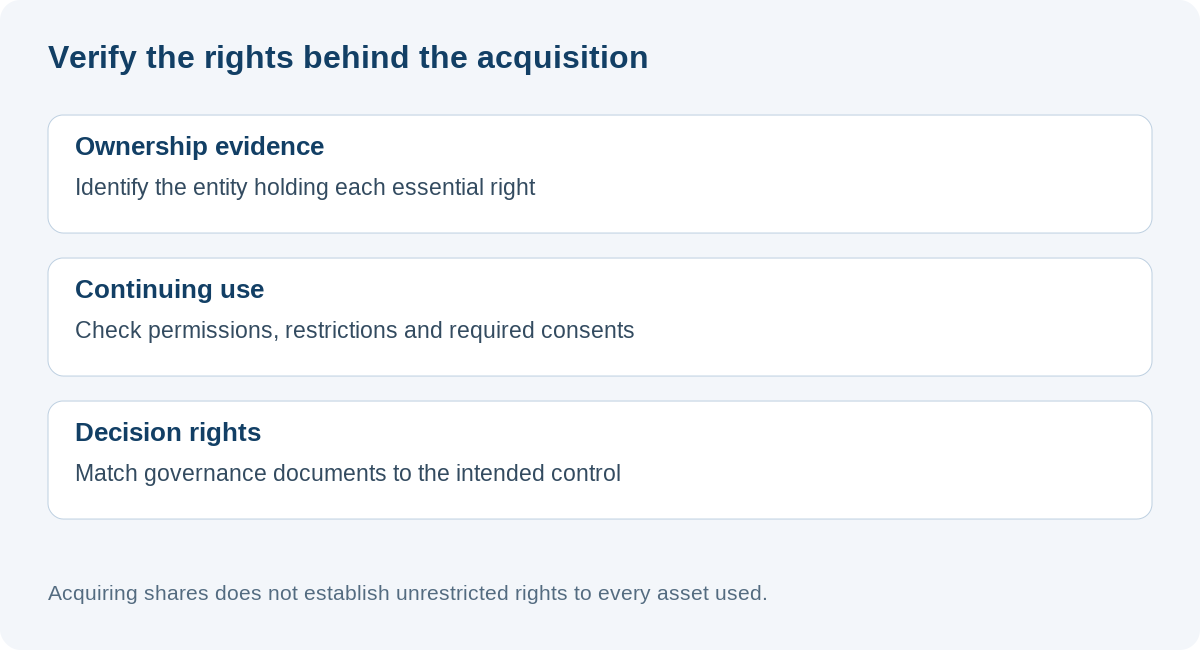
In evaluating the legal advantages and disadvantages of mergers and acquisitions, international buyers should distinguish access to an operating company from permission to carry out every proposed activity. Under Article 21 of Law on Investment 143/2025/QH15, foreign equity participation must meet applicable market-access, national security and relevant land conditions. Specified cases require registration before changes to members or shareholders.
Review the target's actual activities and property interests alongside the proposed ownership. A broad commercial description may conceal activities requiring more specific analysis. The buyer's intended expansion may also differ from the business the target currently operates.
The transaction plan should separately identify applicable investment, competition and sector-specific questions rather than treating one clearance as a universal approval. Allocate responsibility for each review and the evidence needed before completion. Avoid promising a completion date while a material feasibility question remains unanswered.
A foreign holding structure or established local company does not itself establish entitlement to a tax saving, incentive or particular treaty outcome. Where the commercial model relies on such a result, obtain advice for the actual parties, transaction and continuing operations. Identify the supporting assumptions before including the benefit in the valuation.
The same discipline applies to claims that international expansion spreads legal risk. Operating through more entities or countries may introduce additional obligations and coordination costs. Map the obligations and potential exposure rather than assuming that geographical diversity reduces them.
The legal advantages and disadvantages of mergers and acquisitions should be assessed using the target's documents and operating history. A company can own valuable assets while also having unresolved payment disputes, incomplete permissions or obligations that the forecast does not address. A signed acquisition contract does not by itself resolve those matters.
Identify who owes the underlying obligation and who promises to compensate the buyer if a defined problem emerges. These may be different entities. The contract should make the intended economic allocation clear, while the transaction review establishes what third-party rights or requirements remain relevant.
A buyer may negotiate an indemnity for a historical issue, but should still examine the evidence, procedure and realistic recovery route. A broad promise is of limited practical comfort if the responsible person cannot be located or has no accessible resources. Consider proportionate support for material obligations during negotiation.
A founder may personally own premises, a brand or technical materials used by the business. Another group company may provide a critical service. List these arrangements and establish what must continue after ownership changes. The acquisition of shares should not be treated as evidence that every founder-controlled asset is included.
Intellectual property requires the same attention to detail. Review the chain of ownership, permitted uses and relevant contractual restrictions. Buying a business that uses a technology does not automatically establish that the buyer can deploy that technology across all international affiliates or in every product.
The guide to legal due diligence in M&A provides the broader review framework. The international buyer should use the findings to make decisions about structure, conditions and continuing responsibilities, rather than simply collecting a long list of observations.
Agree which issues prevent completion and which can reasonably be managed afterwards. A matter should not be placed on a post-completion list merely because resolving it is inconvenient. Explain how the business will operate in the meantime and what happens if the intended remedy is unavailable.
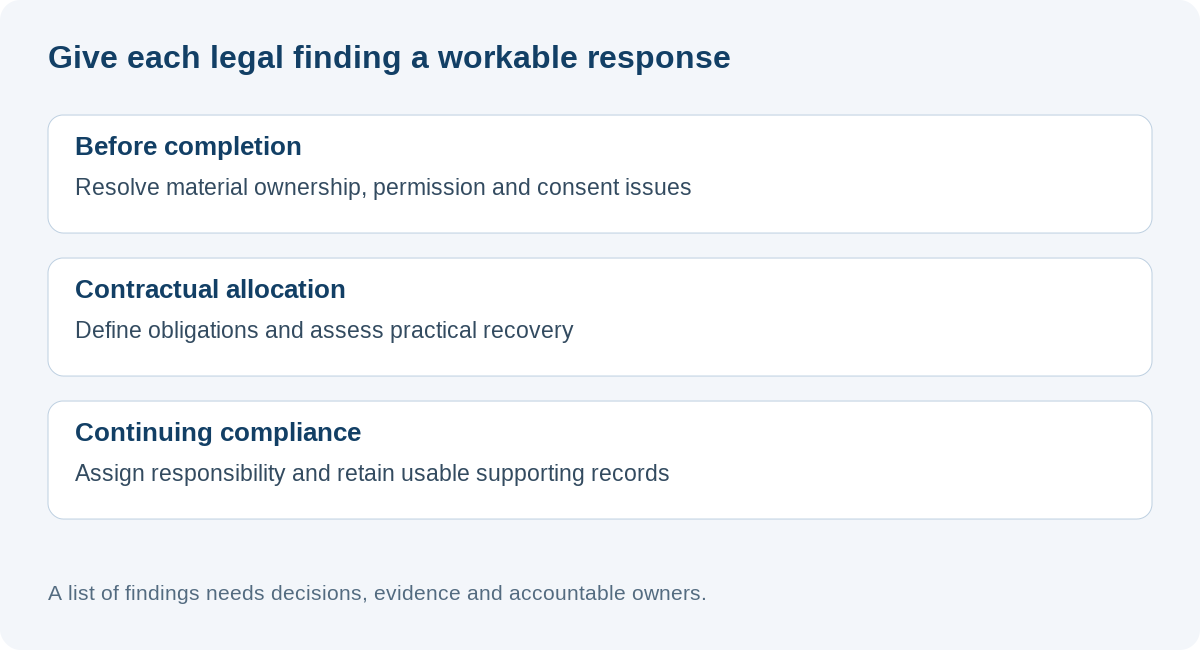
International transactions often involve several adviser teams and internal approval processes. Prepare a responsibility matrix identifying who checks local law, who confirms corporate authority and who coordinates the final documents. Define how conflicting comments or assumptions will be resolved.
Document preparation needs its own timetable. Establish which overseas documents require translation, certification or other formalities for their intended use. Keep a controlled version of the agreement, disclosure materials and completion checklist so that the parties do not sign against different assumptions.
Dispute provisions should be assessed against the parties, likely claims and location of assets. A familiar forum clause does not answer every question about participation, evidence or recovery. Avoid describing a foreign decision as automatically enforceable wherever the other party holds assets.
Test a realistic scenario, such as disagreement over a historical supplier claim after the seller has left management. Determine what records the buyer will retain, who can provide information and what procedure the acquisition agreement requires. This connects contractual drafting with the practical ability to use it.
Suppose an international buyer seeks a Vietnamese service company with an established workshop and customer base. The price assumes uninterrupted use of the workshop. Review shows that the premises are owned by the founder personally and used under an informal arrangement.
The share acquisition does not settle the commercial terms for continued occupation. The buyer needs to investigate the premises documentation and agree a workable continuing arrangement with the relevant owner. The parties may need to make completion dependent on that arrangement rather than relying on a general warranty that the business can continue.
This finding also affects integration. Planned equipment expenditure and service commitments should be assessed against the confirmed premises rights. The example illustrates why legal review must examine the dependencies behind the business model, not only the shares being transferred.
A practical assessment of the legal advantages and disadvantages of mergers and acquisitions includes the period after completion. Prepare a schedule of outstanding filings, consents, record updates and compliance actions appropriate to the transaction. Give each task an owner and identify the evidence that will establish completion.
Preserve the review materials and the final disclosure record. Management needs access to the relevant commitments when making later decisions about expansion, restructuring or the use of acquired assets. A transaction file that no one can use operationally leaves important knowledge with the departed deal team.
Jurion & Partners can assist with assessing a proposed Vietnamese acquisition and connecting material legal findings to transaction documents. A useful initial brief includes the ownership structure, actual business activities and the assets or arrangements on which continued operations depend.
>>> Read more: Foreigners Divorce in Vietnam
>>> Read more: Custody of children in divorce disputes
The legal advantages and disadvantages of mergers and acquisitions become clearer when the buyer verifies the rights being acquired, the conditions for exercising them and the obligations that remain. Use those findings to shape the structure, completion requirements and continuing compliance plan. That provides a firmer basis for an international acquisition than assuming ownership alone delivers unrestricted access or removes legal exposure.






Subscribe today to get more breaking news from Jurion Partners - Solicitors & Litigators

108 Tran Dinh Xu St., Cau Ong Lanh Ward, Ho Chi Minh City, Vietnam
(+8428) 66.701.709 - (+84) 903.419.479
contact@jurionpartners.com
Follow us
Accept payment





 English
 Tiếng Việt