Mergers and acquisitions (M&A) are not just financial and corporate transactions; they also carry significant implications for employees and labor relations.
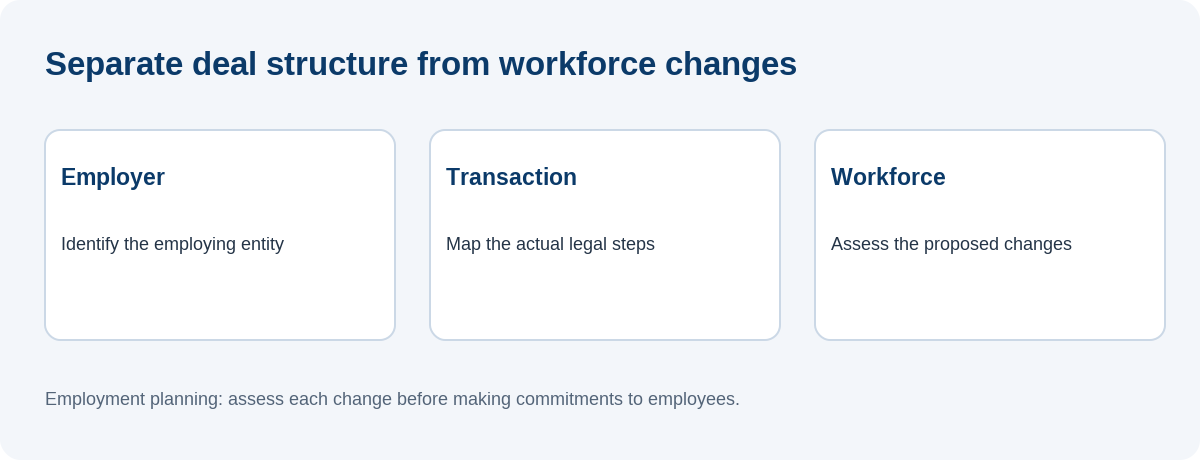
Labor law challenges in mergers and acquisitions arise when a transaction changes the business without adequately planning what happens to its employees. A change of shareholders, a transfer of operating assets and a merger do not necessarily have the same employment consequences. The parties should identify the existing employer, the intended operating structure and any proposed workforce changes before promising continuity or announcing job reductions.
This article explains how to organise the employment workstream in a Vietnamese transaction. It focuses on identifying obligations, assessing the workforce plan and connecting legal review with signing, completion and integration. The aim is to make the proposed treatment of employees clear and supportable, rather than assume that a corporate agreement automatically resolves employment matters.
Where the target company remains the same legal entity after a share acquisition, a new shareholder should not be described as automatically becoming the employer under every contract. Check the actual employing entity and what the transaction documents propose. A group-level announcement may use the buyer's name while employees continue to work for the target company.
This distinction matters when preparing communications, payroll arrangements and documents for signature. If the intention is also to transfer employees to another company, that should be assessed as a separate part of the implementation. Do not infer an agreed transfer, termination or replacement contract solely from a change in ownership of the target's shares.
A merger, business reorganisation or asset transaction can raise different questions about the existing and succeeding employers. Identify which operations and employees are affected, which entities continue and how the proposed arrangement is to work. The commercial term “acquisition” is too broad to answer these questions without looking at the legal steps.
Article 43 of the Labor Code addresses specified reorganisations and transactions affecting the jobs of many employees. It provides for an employment utilisation plan under Article 44 and responsibilities of the relevant employers. The trigger must be assessed against the actual transaction and workforce effects, rather than turned into a claim that every acquisition requires the same employee transfer procedure.
Reviewing labor law challenges in mergers and acquisitions requires more than counting employees. Establish who employs each group, where they work and which documents govern the relationship. Reconcile the personnel list with contracts, amendments, payroll records and relevant policies. Explain discrepancies instead of treating a spreadsheet as verified evidence of every employee's position.
Identify material commitments such as incentive arrangements, retention promises, outstanding leave, training commitments and benefits that may affect the integration budget. Distinguish contractual obligations from discretionary proposals and past practice that needs further investigation. A benefit described informally by a manager may require clarification before the buyer can price or communicate a change.
Review collective arrangements, employee representative structures and any existing disputes or complaints. The objective is to understand the employment environment, not merely collect signed documents. Where records are missing or inconsistent, identify their significance and assign responsibility for clarification before the transaction team makes a decision.
A buyer may want a combined sales team, a new reporting structure or fewer overlapping roles. Those are proposed business outcomes. They do not themselves establish the legal basis for changing contractual terms or ending employment. List each intended change and assess the available route, required steps and practical consequences.
For example, retaining the workforce while changing internal reporting lines is different from moving employees to a separate group company. Closing a site is different from asking particular employees to accept another position. A single announcement that everyone will sign “standard new contracts” can obscure these differences and create uncertainty about existing rights.
Under Article 44, the plan addresses employee groups, responsibilities and the measures and funding for implementation. Consultation with the relevant employee representative organisation, where applicable, and disclosure requirements must be considered. The Code requires the approved plan to be made public to employees within 15 days. A plan should therefore be prepared as an operational document, not a label added to a completed redundancy decision.
Assess the evidence supporting the proposed categories and the resources needed to carry them out. Identify which decisions remain provisional, what retraining or continued employment is contemplated and who must complete each action. Keep the plan consistent with the transaction timetable while allowing the required process to occur before irreversible steps are taken.
One of the recurring labor law challenges in mergers and acquisitions is treating all departing employees as if they leave for the same reason. Resignation, an agreed termination and an employer's proposed termination require distinct analysis. A restructuring label should not be used to avoid examining the actual basis and the process that applies.
Assess job-loss or severance entitlements, if applicable, using the relevant termination ground and employment history. Do not assume the two are interchangeable or that every employee receives the same amount. Separate the legal assessment from the parties' commercial allocation of the cost, and identify which records are needed to support a calculation.
The transaction agreement can allocate economic responsibility between buyer and seller, but that allocation should not be presented as removing employee rights. Agree who funds and performs the obligations, how payment evidence will be retained and what happens if an unresolved claim emerges. Avoid leaving the payroll team to interpret a broad indemnity as an implementation instruction.
Communications should distinguish what has been decided from what remains subject to review or completion. Employees need accurate information about the relevant entity, proposed timing and practical points of contact within the agreed process. Do not promise that all terms are unchanged while another workstream is preparing reductions that have not been assessed.
Prepare a controlled question-and-answer document for managers. It should explain which questions can be answered and which need referral to the responsible team. Consistency is particularly important where several sites or languages are involved. An unofficial reassurance from one manager can conflict with the formal message and undermine trust.
Plan the handling of personnel information during diligence and integration. Limit the material shared to what the review requires, identify authorised recipients and check the applicable data requirements. A buyer's interest in the business does not justify circulating every personnel file without considering the legal basis, access controls and intended use.
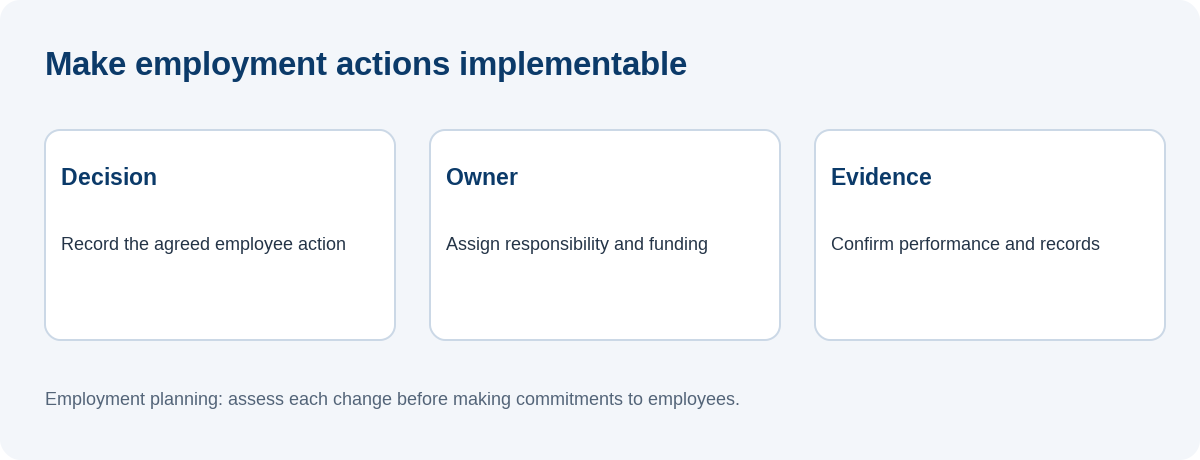
To manage labor law challenges in mergers and acquisitions, each material finding should lead to a decision. A missing contract, unresolved remuneration issue or inconsistent employment record may require clarification, a pre-completion action or a properly allocated post-completion task. Explain why the issue matters and what evidence would resolve it.
Distinguish conditions that must be met before completion from undertakings that can sensibly be performed later. The choice depends on the risk and transaction structure. A general promise to “comply with all labor laws” may leave the parties without a clear plan for a known workforce issue that affects the acquisition budget.
Prepare an employment completion checklist that connects the agreed documents, employee-related actions and funding arrangements. Include the owner of each task and the record confirming performance. If an action depends on a decision or consent that has not yet been obtained, show that dependency instead of marking the task as complete.
After completion, the management team may want consistent policies across the group. Harmonisation should begin with a comparison of existing obligations and proposed changes. Differences in pay, benefits, working arrangements or workplace rules cannot safely be resolved merely by issuing a new group handbook without examining how it applies to the relevant employer and employees.
The guide to employment contracts in Vietnam provides the wider framework for reviewing contractual obligations and proposed changes. Apply that framework to the identified employees and documents, while keeping the M&A workstream focused on the transaction-specific decisions and their implementation.
Foreign employees may also need a separate review of the effect of changes in employer, role or working arrangements on their authorisations. Do not assume a corporate reorganisation automatically updates every approval. Identify the relevant individuals and documents early enough for the responsible team to assess what action, if any, is required.
Before the deal team approves its workforce assumptions, bring together the transaction structure, employing entities, proposed employee changes and unresolved employment findings. Ask whether the financial model includes the identified obligations and whether the completion plan allows for the necessary steps. This makes the employment review part of the deal decision rather than a late administrative exercise.
When discussing a transaction with Jurion & Partners, provide the structure chart, workforce overview and intended changes alongside the proposed timetable. That combination allows the review to address the decisions the parties actually face, including which issues must be resolved before signing or completion and which require a continuing integration plan.
>>> Read more: Foreigners Divorce in Vietnam
>>> Read more: Custody of children in divorce disputes
Managing labor law challenges in mergers and acquisitions means connecting the chosen deal structure with lawful and workable employee arrangements. Identify the employer, test each proposed change, allocate responsibilities and retain evidence of implementation. A transaction is better prepared when its people-related commitments are understood before they become promises to employees.






Subscribe today to get more breaking news from Jurion Partners - Solicitors & Litigators

108 Tran Dinh Xu St., Cau Ong Lanh Ward, Ho Chi Minh City, Vietnam
(+8428) 66.701.709 - (+84) 903.419.479
contact@jurionpartners.com
Follow us
Accept payment





 English
 Tiếng Việt