Review the qualifying category, passport limits, current application forms and sponsor evidence before filing for a temporary residence card in Vietnam.
A temporary residence card in Vietnam depends on a qualifying immigration category, evidence supporting that category and an appropriate sponsor. Planning a long stay or holding a business title does not by itself establish eligibility. Applicants should first identify the legal basis for their stay, then coordinate their passport, supporting documents and proposed activities. This guide explains the general framework and the decisions to resolve before submitting a file.
Article 36 of the immigration law identifies the eligible categories. Under the current consolidated text, these include LV1, LV2, LS, ĐT1, ĐT2, ĐT3, NN1, NN2, DH, PV1, LĐ1, LĐ2, TT, UĐ1 and UĐ2 for qualifying foreigners temporarily staying in Vietnam. A separate NG3 route covers the specified diplomatic and international-organisation personnel and accompanying persons. The category must match the applicant's circumstances; the list is not a menu from which to choose the longest validity.
Investor categories distinguish qualifying investment circumstances. ĐT4 is not included in the general card categories listed in Article 36, so ownership of a small investment should not be treated as an automatic residence-card entitlement. Review the applicant's actual investment position and evidence against the relevant category. A company registration document alone may leave important questions about the individual investor or representative unanswered.
The employee categories also need separate analysis. LĐ1 concerns workers with confirmation that they are not subject to a work permit, subject to the treaty qualification in the law; LĐ2 concerns workers subject to a permit. Immigration permission and labour authorisation serve different purposes. An employer should coordinate the work permit procedure for foreigners with the residence application rather than assume that one document replaces the other.
TT eligibility depends on the family relationship and the relevant Vietnamese citizen or qualifying foreign sponsor. Do not assume that every relative of any cardholder qualifies in the same way. The law also recognises UĐ1 for the specified high-quality digital-technology personnel and other statutory preferential cases, and UĐ2 for the specified accompanying family members. A general description such as “technology expert” does not establish that the preferential requirements have been met.
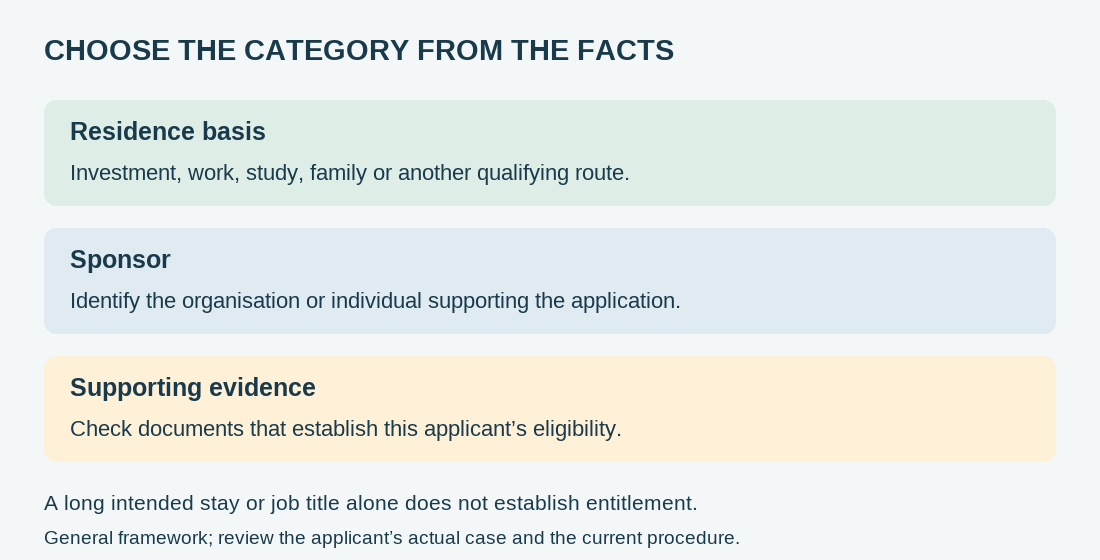
A temporary residence card in Vietnam is permission for a limited residence period and has value in place of a visa under the immigration law. It is not permanent residence. Article 38 sets category-specific maximum terms, while requiring the card to expire at least thirty days before the passport's remaining validity ends. A maximum term is a ceiling, not a promise that every applicant receives that full period.
| Category | Maximum term |
|---|---|
| ĐT1, UĐ1, UĐ2 | Ten years |
| NG3, LV1, LV2, LS, ĐT2, DH | Five years |
| NN1, NN2, ĐT3, TT | Three years |
| LĐ1, LĐ2, PV1 | Two years |
For example, an applicant in a category with a five-year ceiling should not plan around five years if the passport expires much earlier. Check the passport before requesting a term and review the documents supporting the qualifying activity. The old assumption that all cards run for two to five years overlooks both shorter outcomes and categories with a ten-year ceiling.
Expiry does not produce an automatic extension. The law provides for consideration of a new card when the existing card expires. The sponsor and applicant should review continued eligibility and the applicable procedure in advance. Renewal of employment or continuation of an investment is a fact to document, rather than a substitute for the immigration process.
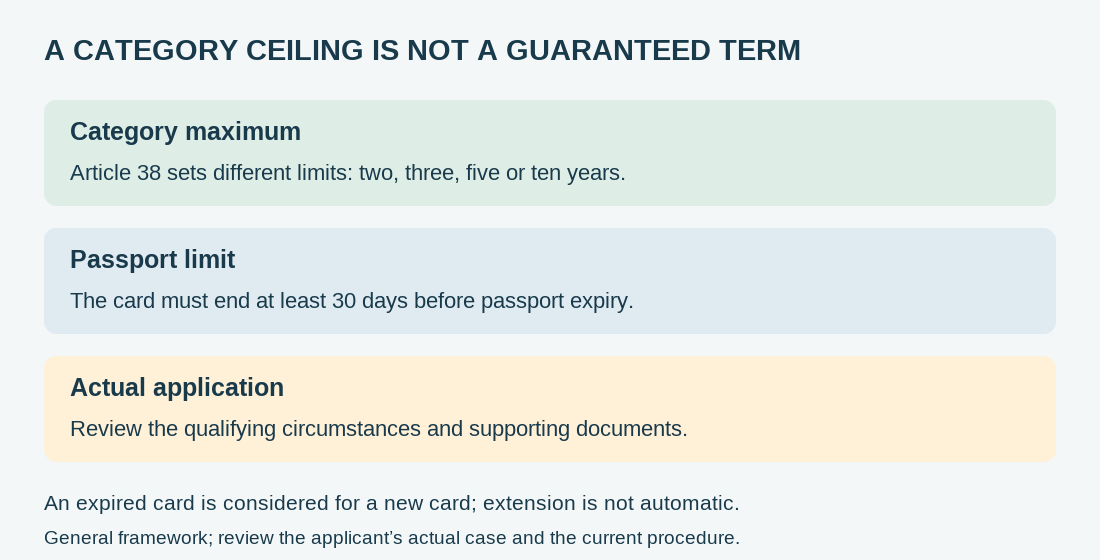
The general dossier under Article 37 includes a sponsor's written request, the applicant's declaration with a photograph, the passport and evidence establishing the eligible category. The published police procedure differentiates form NA6 for an organisation's request, NA7 for an individual sponsor and NA8 for the applicant's declaration. Use the current versions following Circular 70/2026/TT-BCA, effective from 1 July 2026, rather than a saved form from an older guide.
The published provincial police checklist specifies two photographs measuring two by three centimetres, one attached to the declaration and one separate. Check the receiving authority's current instructions for the selected filing channel before producing the final set. Do not substitute an unrelated overseas “resident card” form or add an obsolete declaration simply because it appears in an old checklist.
Depending on the route, relevant supporting records may concern work authorisation, investment, a recognised representative position, study or family relationships. Identify what each document proves. For a family application, compare names and dates across the passport and relationship records. For an employment application, compare the employer, individual and assignment details with the work-authorisation evidence. Resolve inconsistencies before copying them into multiple forms.
Foreign-issued documents may require formalities such as legalisation, certification or translation, depending on the document and any applicable exemption. Confirm those requirements for the actual record and issuing country. A scanned copy does not automatically settle whether an original or a formally certified version is required. Keep a file inventory distinguishing documents already available from those still being obtained.
For the general non-diplomatic route, Article 37 connects filing with the immigration authority where the sponsoring organisation is based or the individual sponsor resides. NG3 applications follow the competent Ministry of Foreign Affairs channel. Confirm the current receiving office and published procedure for the case; choosing an office merely because it is close to the applicant's accommodation can lead to an unsuitable submission.
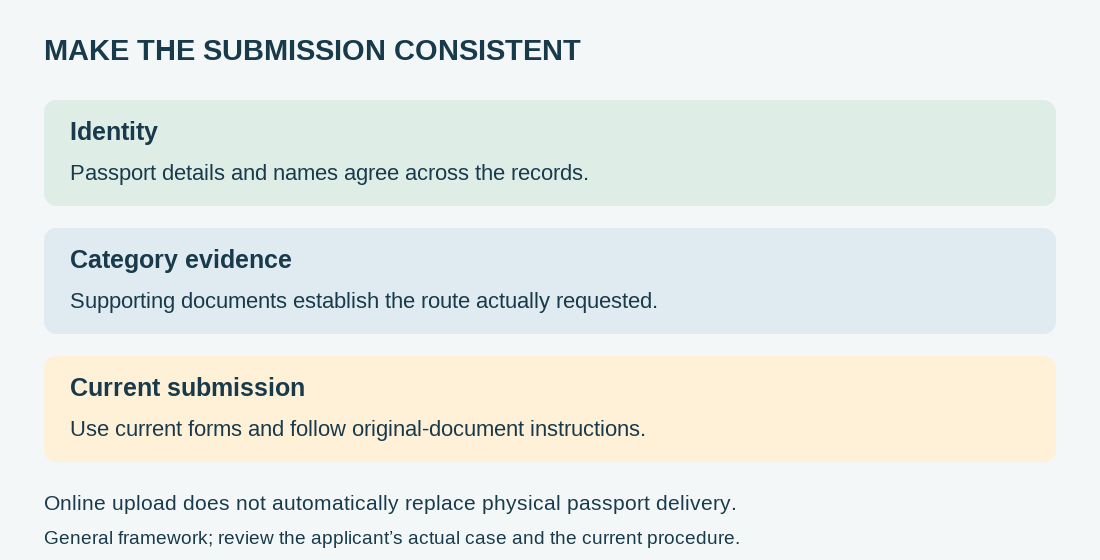
The published police procedure allows direct and online submission, with postal supplementation where instructed. Online filing should not be assumed to eliminate physical documents: the published checklist requires the passport to be sent to the receiving authority and addresses electronic certification or postal delivery of other supporting records. Follow the instructions associated with the actual application rather than treating upload confirmation as the final acceptance of every document.
Article 37 provides a five-working-day consideration period after receipt of the complete dossier. The current published provincial procedure describes the general period by reference to a complete, valid file and the required fee. Preparation, document procurement and correction of an incomplete file should therefore be scheduled separately. A temporary residence card in Vietnam should not be sold as a guaranteed result within five calendar days.
Special arrangements can have different rules. The published procedure separately identifies a three-working-day route for the specified international-financial-centre cases under Decree 327/2025/ND-CP. That exception should not be advertised as the ordinary timetable for every investor, manager or specialist. Check the special eligibility before relying on its processing arrangements.
Keep the receipt or electronic acknowledgement, the accepted document list and any request for supplementation. Assign someone to monitor messages and respond within the stated requirements. If the authority identifies missing evidence, provide a consistent correction supported by the facts. Repeatedly changing the category or sponsor information without explanation can leave the file less coherent.
During preparation, separately check the applicant's existing permission to stay and planned travel. A pending card application should not be treated as an automatic extension of current immigration permission. Consider whether the passport will be with the authority when travel is intended and obtain case-specific guidance before making arrangements that depend on immediate access to it.
A temporary residence card in Vietnam also does not remove the accommodation-related declaration requirements. Article 33 addresses temporary-residence declarations through the person managing the accommodation. Changes in address or passport information require attention under the applicable rules. Keep the sponsor informed so that immigration records and the applicant's actual circumstances can be reviewed together.
If employment ends, the sponsor changes or a passport is replaced, check the relevant procedure before assuming the existing card can simply continue unchanged. Sponsors have responsibilities concerning the foreigners they invite or sponsor, including notification when sponsorship is no longer needed. The date printed on the card is not the only fact relevant to continued lawful arrangements.
A useful brief identifies nationality, passport expiry, present immigration status, the proposed category, sponsor and supporting activity or family relationship. Add the intended stay, any travel commitments and documents already available. State uncertainties directly, including inconsistent names or an unresolved work-authorisation position. This allows the adviser to identify the dependency that actually prevents filing.
When seeking assistance from Jurion & Partners, ask for a review of eligibility, current forms and the evidence gaps before agreeing a submission timetable. The work should be based on the applicant's circumstances and the authority's current procedure. Advice can organise the file and explain the route; approval remains a matter for the competent authority.
An application for a temporary residence card in Vietnam is strongest when the category, sponsor, passport and evidence tell the same story. Start with eligibility, plan around the applicable validity limits and use current forms. Continue monitoring changes after issuance so that the residence arrangement remains consistent with the purpose and facts on which it was granted.






Subscribe today to get more breaking news from Jurion Partners - Solicitors & Litigators

108 Tran Dinh Xu St., Cau Ong Lanh Ward, Ho Chi Minh City, Vietnam
(+8428) 66.701.709 - (+84) 903.419.479
contact@jurionpartners.com
Follow us
Accept payment





 English
 Tiếng Việt