The dispute between shareholders or members of the company is a dispute within the enterprise. These disputes are understood as contradictions and disagreements arising in the course of business operations between members, shareholders, or between groups
Shareholder and member disputes in a Vietnamese company require a clear account of the right being asserted, the person responsible and the outcome sought. An investor may disagree with a management decision, question an ownership record or seek payment under a separate agreement. These concerns can arise together, but they do not necessarily support the same claim. A useful assessment separates the relationships before choosing negotiations, proceedings or another appropriate response.
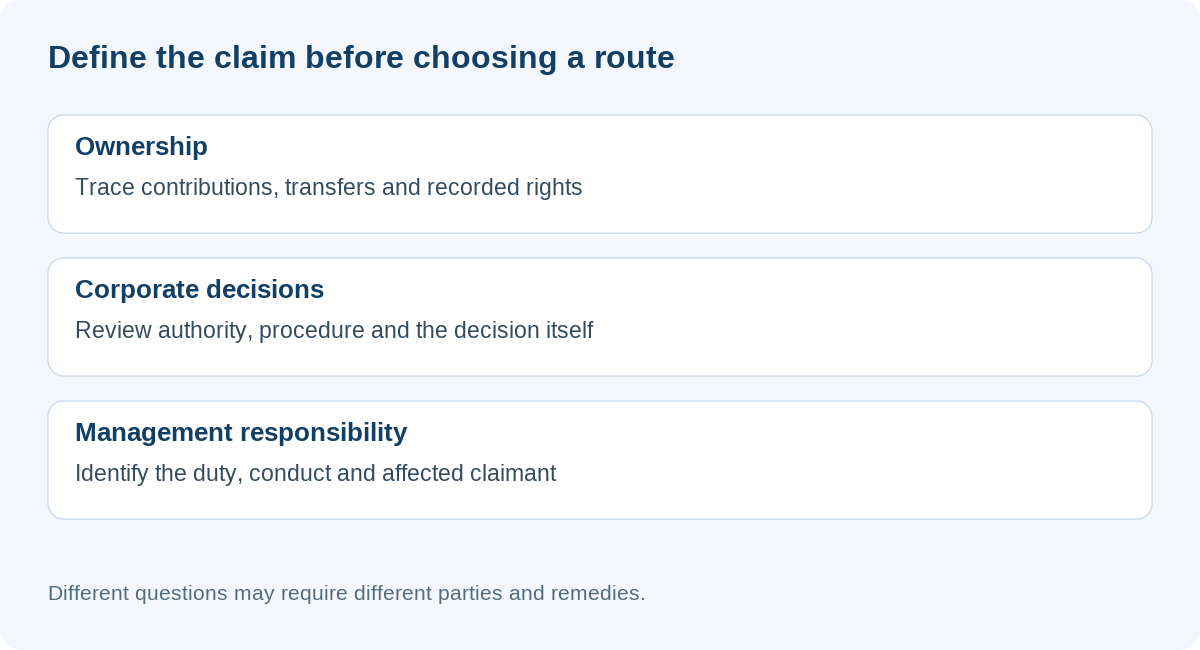
Identify the company, its legal form and the people involved at each relevant date. A person may be an investor, director, employee and lender at the same time. Removal from a management position does not itself answer whether that person continues to own shares. Similarly, an unpaid loan should not be treated automatically as an unpaid dividend. Describe each role and the documents supporting it before using a single label for the disagreement.
For an overseas investor, also identify the person authorised to issue instructions and receive advice. The interests of the investor, a local manager and the Vietnamese company may diverge. An adviser should know whose position is being assessed and whether another professional already represents the company. This helps organise communications and identify potential conflicts before sensitive records are circulated.
Compare subscription or contribution documents, transfer agreements, payment evidence and the relevant ownership records. Record changes in a dated table, with a reference to the supporting document. If two records conflict, retain both and explain their source. A spreadsheet prepared for a recent meeting may be useful, but it should not silently replace earlier evidence of how ownership was acquired or changed.
Where assets were contributed, consider the ownership documents, valuation arrangements and evidence of delivery or transfer. Where money was paid, identify its recipient and recorded purpose. Funds sent to a founder, funds paid into the company and a loan advanced for operations may have different consequences. Avoid deciding the entire question from the description on a single bank transfer.
In shareholder and member disputes, the practical objective should be expressed precisely. Does the investor seek recognition of an ownership interest, access to a particular record, review of a resolution, payment under a transfer agreement or compensation for an alleged breach? The supporting facts and appropriate parties may differ. A general demand to restore fairness may leave the central legal issue undefined.
Identify which corporate body made the decision and which version of the charter applied. Review the notice, agenda, circulated materials, representation arrangements, attendance and voting record. Distinguish objections to the procedure from objections to the substance. A commercially unattractive decision is not automatically unlawful, while a favourable financial forecast does not by itself answer a concern about authority or required approval.
Vietnam's Enterprise Law contains separate provisions for challenges involving members' council decisions and shareholders' meeting resolutions. Articles 49 and 151 should be checked against the entity and proposed claimant. Do not assume that eligibility or the event starting a time limit is identical in both cases. Retain evidence showing when relevant documents were received, not merely the date printed on them.
Identify the duty said to have been breached and the conduct relied upon. Separate loss suffered by the company from a personal loss claimed by an investor. This affects the analysis of who may bring a claim and who should receive the requested remedy. The Enterprise Law addresses proceedings concerning managers in provisions including Articles 72 and 166, with requirements that need to be assessed for the particular case.
A disappointing business result is not a complete explanation of a breach. Review the manager's responsibilities, relevant approvals, information available at the time and the transaction actually carried out. Financial or valuation questions may require specialist assistance. Keep the distinction between an allegation, supporting evidence and an established conclusion visible throughout the assessment.
A subscription, transfer or shareholder agreement may contain payment obligations, information commitments or arrangements for an exit. Read the signed wording together with amendments and evidence of performance. Identify which parties made each promise. A commitment given by one investor should not automatically be attributed to the company, and a contractual remedy should not be assumed to replace every corporate-law requirement.
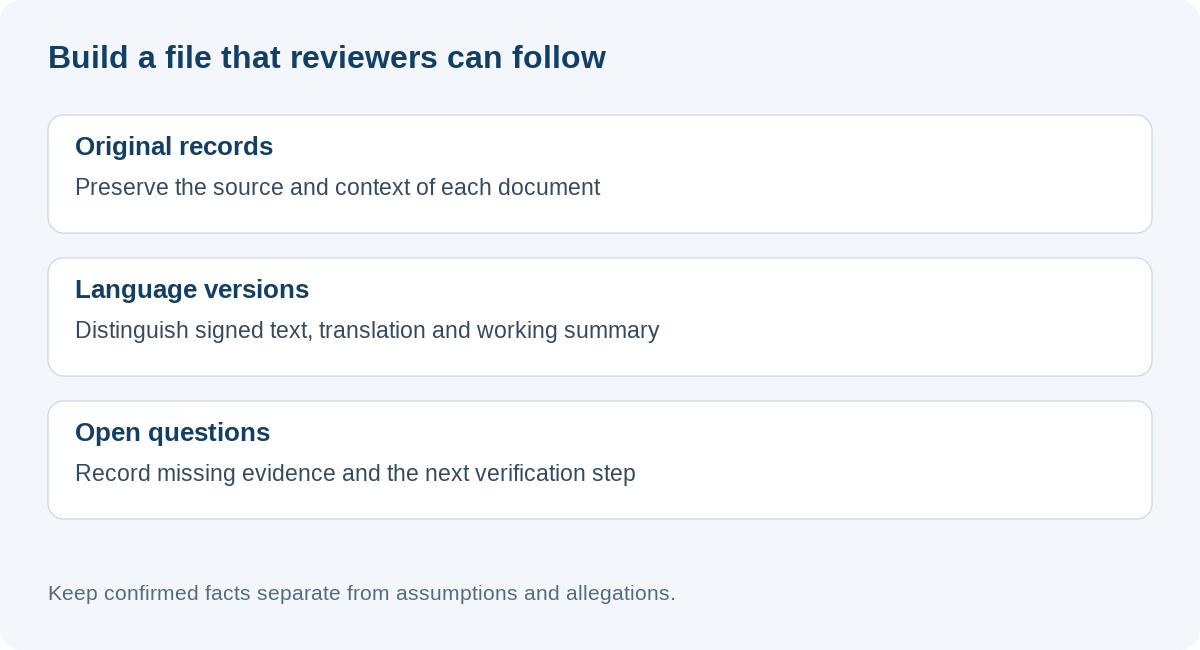
Prepare a chronology with an event, date, person and document reference for each important step. Explain why the event matters to the proposed request. Include gaps and conflicting accounts. A file organised this way is easier to assess than a large folder of unexplained screenshots, especially when several people joined the investment at different stages or negotiated through separate channels.
Record whether an English document is a signed contractual version, a translation or an internal summary. Keep the Vietnamese source alongside a working translation where available. If a term such as member, shareholder, director or representative has been used inconsistently, explain the uncertainty rather than standardising it silently. Differences in terminology can conceal a substantive disagreement about role or authority.
Where a translation is needed for a procedure, check the applicable requirements rather than assuming an informal version is sufficient. For preliminary advice, mark uncertain passages and provide the surrounding text. A short extract can identify an issue, but the full document may contain definitions, qualifications or amendments that change its meaning.
Retain original messages and files where they can be accessed legitimately, with information about their source. Keep extracts distinguishable from complete records. Avoid altering data to make a chronology appear consistent, or accessing another person's account without authority. If evidence may be lost, discuss an appropriate preservation strategy promptly instead of taking measures that create additional legal exposure.
A response to shareholder and member disputes should identify essential operational decisions. Payroll, supplier commitments and customer requests may continue while investors disagree. Record who has authority to make routine decisions and how urgent matters are escalated. Any temporary working arrangement should be assessed against the governing documents and should not be described as changing ownership unless that is its intended and properly documented effect.
Do not assume that sending an objection suspends a shareholders' meeting resolution. Article 152 addresses continuing effectiveness during a challenge, including the relevance of interim measures ordered by the competent authority. The appropriate response depends on the decision and its consequences. Seek an assessment of the available route rather than instructing staff to treat every disputed resolution as already cancelled.
Circulate an agenda that separates agreed facts, disputed matters and documents still required. Record proposals without presenting them as admissions or final commitments unless that is intended. A meeting note should identify what was agreed, who will act and when the matter will be reviewed. A statement that the parties will cooperate may be too vague to guide implementation.
If an investor proposes to exit, discuss the valuation process, payer, payment stages, ownership transfer documents and any continuing obligations. Personal guarantees, access credentials and management handover may need separate attention. Agreement on a headline price alone may leave important risks unresolved, particularly where performance will occur in several stages or depend on third-party cooperation.
Court or arbitration questions should be assessed by reference to the relationship, requested relief, relevant agreement and procedural rules. Avoid relying on a general statement that all corporate disagreements belong to one forum. A clause in an investor agreement may require analysis of its parties and scope. The company and a manager may not occupy the same position under every document connected with the investment.
When settlement involves revised contractual obligations, a structured contract drafting and review process can help translate agreed commercial terms into defined responsibilities. The settlement documents should identify deliverables, timing, approvals and evidence of completion. Check that the intended arrangement can be implemented, including any separate corporate steps, rather than treating signature as the only milestone.
Support may include reviewing the file, identifying potential claims, preparing document requests, advising on meetings or assisting with a dispute procedure within an agreed scope. Distinguish preliminary assessment from representation and implementation. The engagement should identify the client, authorised instructors and expected outputs. Where documents remain unavailable, the advice should state the resulting limitations and what further work could resolve them.
Before discussing shareholder and member disputes with Jurion & Partners, prepare an ownership chart, a brief chronology and a statement of the outcome you seek. Explain which company activities are at risk and which dates need immediate attention. These materials help focus the initial assessment on decisions that can be taken with the evidence available.
To approach shareholder and member disputes constructively, define the right in question, preserve the underlying records and separate urgent operational needs from the final remedy. A documented plan gives investors and managers a clearer basis for choosing their next step while keeping unresolved factual and legal questions visible.






Subscribe today to get more breaking news from Jurion Partners - Solicitors & Litigators

108 Tran Dinh Xu St., Cau Ong Lanh Ward, Ho Chi Minh City, Vietnam
(+8428) 66.701.709 - (+84) 903.419.479
contact@jurionpartners.com
Follow us
Accept payment





 English
 Tiếng Việt