In Vietnam, intellectual property (IP) has become one of the most valuable assets in mergers and acquisitions (M&A).
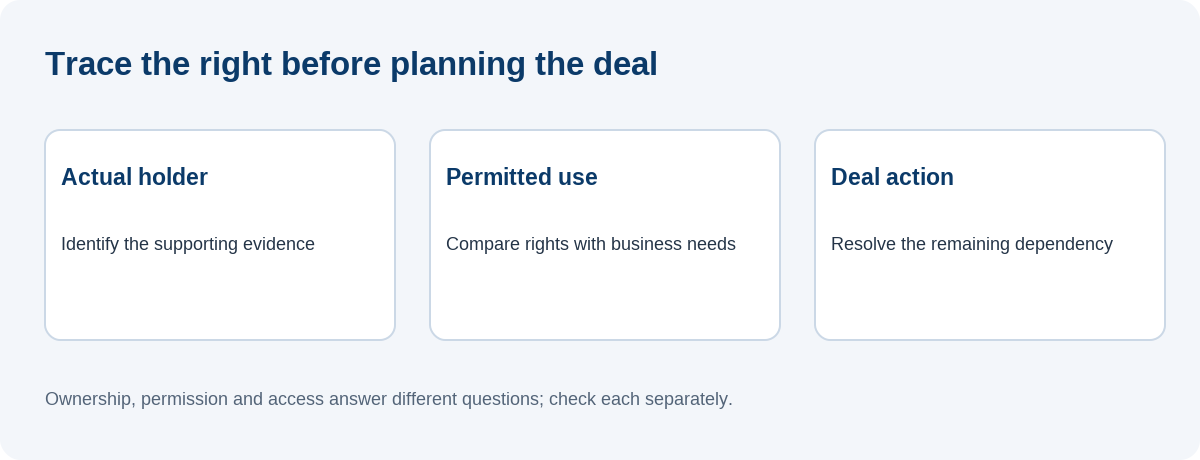
IP protection in mergers and acquisitions begins with a practical question: will the business still have the rights it needs after the deal? A recognisable brand, a software platform or valuable know-how may support the investment case, but the company being acquired may not own everything it uses. Before agreeing the price and completion arrangements, identify the actual rights holder, the evidence supporting that position and any permission required for continued use.
Build an inventory around products and operations, rather than collecting certificates without context. For a software business, relevant items may include source code, documentation, user interfaces, third-party components, product names and confidential development information. A manufacturer may depend on technical drawings, production know-how, registered designs, inventions and brands. Identify which items generate revenue, which distinguish the product and which are essential to keeping it available.
For each important item, record the entity using it, the person or entity said to hold the rights and the basis on which use is permitted. Keep operational access separate from legal ownership. Possession of a password, a design file or a source-code repository does not by itself answer who may reproduce, modify, license or transfer the underlying material. The inventory should expose those questions early enough for meaningful investigation.
Vietnamese law does not establish every IP right through registration. Copyright can arise when a work is created and expressed in a material form, without registration. Trade secrets follow a different basis of protection. Registered industrial rights require their own status checks. The legal framework includes amendments effective from April 2026, so a review should not rely solely on a statement of the law as amended in 2022.
Translate these differences into the request list. A registration search can help assess a trademark record, while the history of a software project may require development agreements, assignments and records of contributions. For confidential know-how, examine what information is involved and how access has been controlled. The absence of a certificate should not automatically end the investigation, and the presence of one should not replace a review of the business's actual use.
IP protection in mergers and acquisitions depends on whether the buyer acquires shares, selected assets or rights to use particular technology. When the target remains the rights holder after a share purchase, the acquisition does not necessarily require an assignment of every right it owns. However, licence provisions or other arrangements may react to a change in control. The team should examine the actual clauses instead of assuming that continuity of the legal entity settles every issue.
An asset purchase calls for a different map. Specify the rights included, identify the current holder and determine the documents and steps needed for the intended transfer. If the buyer only needs a licence, define the permitted activity and its limits. An agreement to use software for internal operations is different from permission to distribute it to customers or incorporate it into another product. The commercial plan should match the rights actually being obtained.
Consider a company that sells products under a trademark registered in its founder's name. The founder proposes to sell shares in the company, and the buyer assumes the brand comes with the business. Buying those shares does not by itself transfer a separately held trademark from the founder to the company. The company may instead depend on an informal permission that is poorly documented or difficult to maintain after the relationship changes.
The parties need to decide what rights the buyer requires, investigate the existing arrangement and agree suitable documentation and implementation steps. A transfer, a properly assessed licence or a different structure may be considered according to the facts. Recording the founder's personal holding as an unresolved issue is more useful than describing the target as owning “all business IP” because its products carry that brand.
Software, designs and marketing material may have contributions from founders, employees, contractors, agencies or collaborators. Review the relevant engagements and the rights they address. Payment of an invoice should not be treated as a complete explanation of ownership. Where documents are missing, identify the gap, the contributions concerned and the evidence needed to assess or resolve it. Avoid presenting every missing agreement as proof that the target has no rights.
The review should also distinguish transferable economic rights from rights subject to legal limits. Copyright assignment does not mean that every author-related right can simply be purchased. Joint ownership may require additional attention. A general clause covering “all intellectual property” should be tested against the actual right, contributors and transaction rather than assumed to cure every historical gap.
IP protection in mergers and acquisitions includes licensed components, hosted services, development tools and externally supplied content. A target may own its original code while depending heavily on third-party material. Ask which licences apply, what uses they permit, how fees are calculated and whether assignment or a change in control affects the arrangement. Rights to modify, sublicense or offer access to customers should be checked where those activities support the investment plan.
Technical specialists can help identify components and compare the product with development records. Legal advisers assess the relevant terms and exposure, while the product team explains intended use. These roles complement one another. A legal document review is not a security audit or a complete code scan, and a technical inventory is not a legal conclusion that all licence conditions have been satisfied.
A trademark entry should be compared with the mark actually used, relevant goods or services and the jurisdictions important to the business. Likewise, examine the status and scope of other registered rights rather than treating any registration as worldwide protection for every product. Record pending applications, renewals, maintenance obligations and challenges that could affect continuity. Give the business team enough detail to understand which assumptions require further work.
Claims deserve a separate chronology. Collect correspondence about alleged infringement, objections, settlement terms and permissions that may limit future activity. Owning a registered right does not automatically settle every allegation involving another party's rights. The buyer should understand whether a dispute could affect a key product, sales channel or planned expansion, and what information remains unavailable. Legal analysis should inform the commercial decision without claiming to establish the asset's financial value.
Disclosing technical information to a prospective buyer can create exposure before a transaction is certain. Agree a proportionate process for sensitive material: identify who needs access, what can initially be summarised and when more detailed disclosure is justified. Consider restricted review arrangements where a bidder competes with the target. Record the purpose and limits of access rather than circulating the same unrestricted files to everyone involved.
These controls should continue through negotiations and any abandoned deal. Address retention, return or deletion of materials in a way that recognises applicable obligations and practical system limitations. Review how confidential information is shared internally as well. A confidentiality agreement provides part of the framework, but everyday access practices determine whether sensitive information is handled consistently with that framework.
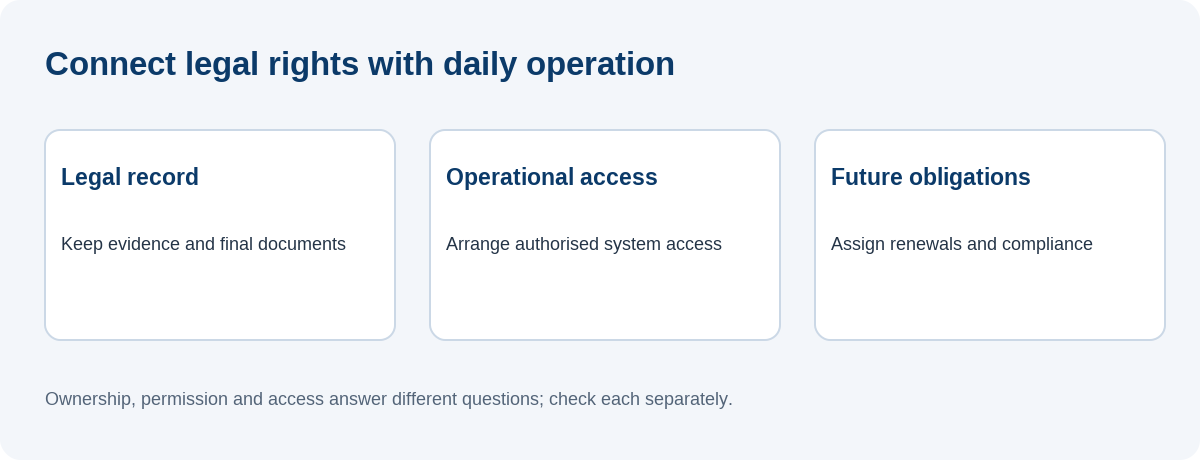
IP protection in mergers and acquisitions becomes practical when each material issue has an agreed treatment. A missing permission may require action before completion. An unresolved historical exposure may need a negotiated allocation. A routine maintenance task may belong in the post-completion plan. Explain why a particular treatment fits the issue and which evidence will establish that the required action has occurred.
Transfer formalities differ by right. For registered industrial rights within the relevant statutory category, assignment effectiveness requires registration; this should not be confused with the rules for licensing. Some rights also have specific transfer restrictions. The transaction schedule should therefore identify the applicable process for each asset rather than promise that signing a single acquisition agreement completes every IP transfer.
Allocate responsibility for preparing documents, obtaining required cooperation, making filings and tracking results. Where part of that process continues beyond payment, the agreement and handover plan should explain the remaining duties and escalation route. A filed application, an acknowledged submission and a completed record change are different milestones. The completion team needs to know which milestone the transaction actually requires.
The wider legal due diligence review places these IP findings alongside the target's corporate, contractual and regulatory position. Coordinating those workstreams helps prevent an ownership issue from being overlooked because it appears in a development contract rather than the IP registration folder.
For a transaction involving valuable brands or technology, a focused instruction to Jurion & Partners can begin with the products being acquired, the rights inventory and the buyer's intended use. Ask which ownership and permission questions remain open, what evidence is needed and which actions should precede completion. That provides a concrete basis for review and negotiation.
>>> Read more: Competence of Vietnam courts over civil cases with foreign elements
IP protection in mergers and acquisitions should leave the buyer with a clear account of what the business owns, what it may use and what still needs to happen. Before treating the IP workstream as complete, reconcile the legal evidence with the operating plan and assign every outstanding action. That is a stronger foundation for continuity than assuming that the purchase price, a registration certificate or control of an account supplies all necessary rights.






Subscribe today to get more breaking news from Jurion Partners - Solicitors & Litigators

108 Tran Dinh Xu St., Cau Ong Lanh Ward, Ho Chi Minh City, Vietnam
(+8428) 66.701.709 - (+84) 903.419.479
contact@jurionpartners.com
Follow us
Accept payment





 English
 Tiếng Việt