Mergers and acquisitions (M&A) are powerful tools for business expansion, but they also raise complex governance challenges.
Corporate governance after M&A turns the transaction's ownership arrangements into a workable system for making and recording decisions. Completion may change who owns the business without automatically changing its legal entity, management appointments or signing authority. The parties need to establish what continues, what must change and who is responsible for each action.
A governance handover should connect the transaction documents with the company's actual operations. The aim is not simply to replace names on a chart. It is to ensure that decisions are taken by the right body, authority is understood and the people running the business can demonstrate how important actions were approved.
A share acquisition can leave the target as the same legal entity under new ownership. A merger or consolidation involves a different reorganisation analysis. Begin with the completed legal steps and the entities that remain, rather than assuming every transaction creates a new company or requires an entirely new board structure.
The applicable governance framework also depends on company type and any specific regulatory requirements. A limited liability company and a joint stock company should not be given an identical appointment checklist without review. Identify the company's governing documents, relevant corporate bodies and existing appointments before drafting the implementation plan.
Compare the agreed ownership and governance position with the signed transfer documents, corporate approvals and records delivered at completion. Explain any gap between what the parties intended and what has actually been implemented. A transaction presentation is not evidence that every appointment, amendment or required filing has taken effect.
Prepare a short status schedule showing the action, responsible person and supporting record. Distinguish completed actions from documents awaiting signature, information awaiting verification and steps that require further review. This allows management to operate on a reliable account of the company's position from the first day.
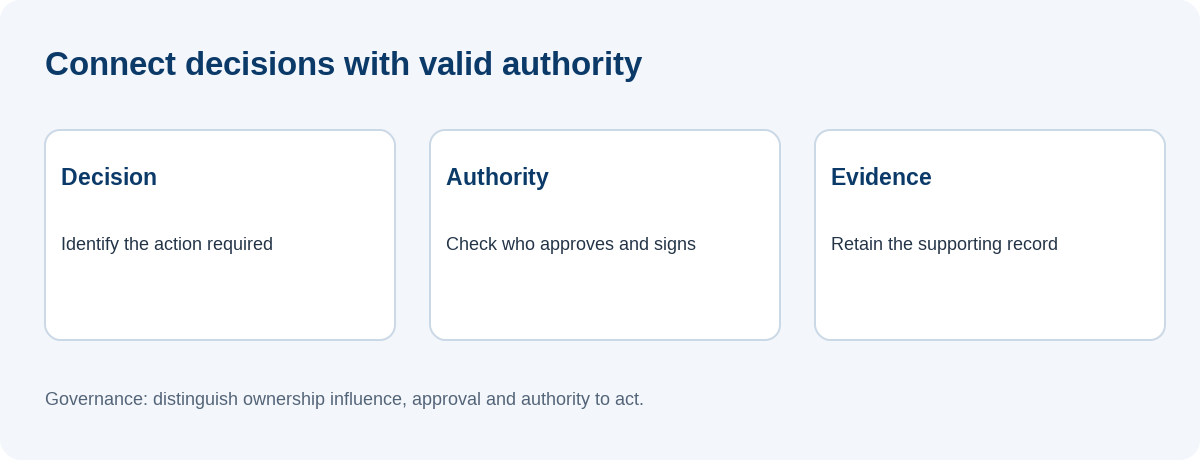
An early priority in corporate governance after M&A is to distinguish ownership influence from legal authority. The new controlling shareholder may have a commercial view about a transaction, but the company still needs the approval and execution steps applicable to that decision. Group instructions should not be treated as automatically replacing the company's own governance process.
Map material decisions to the body or person responsible under the applicable rules and documents. Examples may include borrowing, major contracts, asset disposals, appointments and transactions with related parties. Avoid creating a matrix that looks convenient but conflicts with the charter or allocates a decision to someone who cannot validly take it.
Clarify how an approved decision becomes an executed document. Internal approval, representative authority, bank mandates and a practical payment workflow may involve different records. Where several authorisations exist, identify their scope and whether they need amendment or revocation. A manager should not have to guess which old instruction remains effective.
For example, the group procurement team may select a supplier while the local company is expected to sign the contract and pay invoices. Identify which entity purchases the goods, whose approval is needed and who can commit that entity. If the supplier receives conflicting instructions, a group policy alone may not explain which instruction is authorised. Record the arrangement before using it, and give the operational team a clear route for exceptions.
The acquisition agreement, shareholder arrangements and charter may address overlapping matters. Review them as a connected set while distinguishing their legal function. The fact that the buyer and seller have agreed an obligation does not establish that it has already been implemented in the company's governing documents or binds every relevant person in the same way.
Identify provisions that need action, such as an agreed appointment process, information arrangement or reserved matter. Check the implementation requirements and the people whose participation is necessary. Do not assume that copying transaction language into an internal policy creates the intended corporate effect.
Where several owners remain, consider how decisions will be discussed, information supplied and unresolved issues escalated. A process should allow the company to distinguish a commercial disagreement from an urgent operational matter. Explain any proposed deadlock or exit mechanism carefully rather than present it as a universal solution.
Minority interests deserve attention in the governance design. The applicable rights depend on law, company type and the relevant arrangements. Avoid assuming either that majority ownership removes every minority right or that a contractual protection automatically works without its required implementation. The review should identify the actual rights and practical process for exercising them.
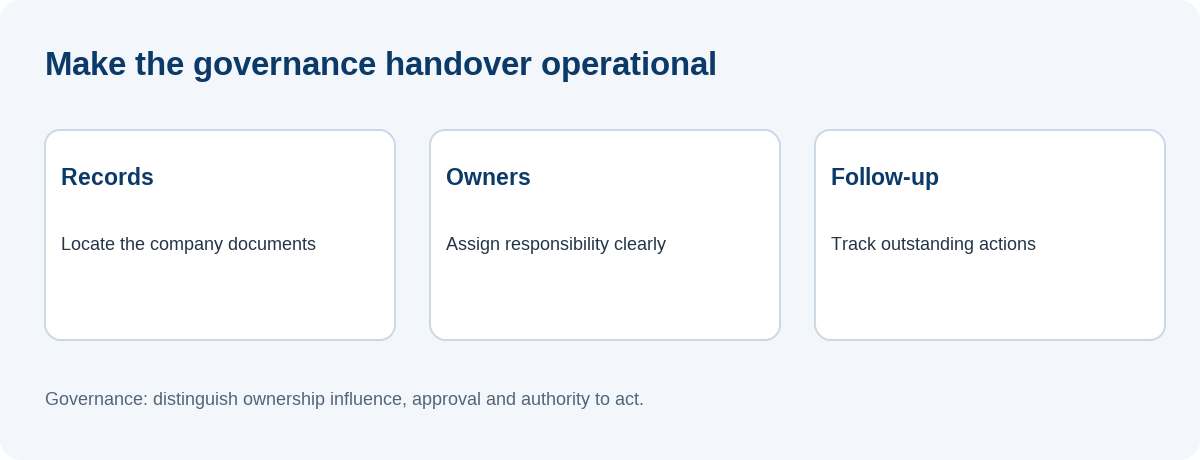
Corporate governance after M&A depends on records and access as much as formal appointments. Establish who holds corporate documents, registers, authorisations and important correspondence. Record what has been delivered and what remains outstanding. A handover list should be specific enough for the new team to locate the evidence behind a decision.
Review control of signing tools, bank access and operational systems through an authorised process. Changes should preserve business continuity while addressing the risk of obsolete permissions. Keep a record of who approved the changes, when they were implemented and which instructions were communicated to the people affected.
Where former managers remain during a transition, define their responsibilities and escalation route. Distinguish advisory assistance from authority to commit the company. Where managers leave, establish who will answer unresolved questions about records or transactions rather than rely on an informal expectation that they will remain available indefinitely.
Due diligence may identify missing records, unresolved filings or issues in contracts, employment and regulated activities. These findings should become a tracked work programme with owners and evidence of completion. Merely creating a compliance committee does not show that a known issue has been corrected.
A legal due diligence review provides the basis for identifying those issues and their significance. At handover, distinguish what was remedied before completion, what the seller still undertakes to do and what the continuing company must manage. This makes the report usable by the people responsible for the business.
Check which changes require registration, notification or updates to internal records under the current rules. Beneficial ownership information is one area that needs attention under Vietnam's amended registration framework. A post-deal review should assess the actual changes and applicable requirements rather than assume that every company must repeat every filing whenever a new rule is issued.
Reporting is useful when it allows the responsible body to understand performance, risk and decisions requiring attention. Agree what information is needed, who prepares it and when it is reviewed. A large volume of documents does not necessarily provide better oversight if material exceptions are hidden within it.
Set expectations for meeting papers as well as reporting frequency. A proposal can identify the decision requested, available alternatives, material obligations and the person responsible for implementation. This helps participants assess the same information and creates a clearer record of what was considered. Where information is incomplete, make the limitation explicit instead of presenting a provisional recommendation as an approved instruction.
For example, a management report may need to highlight an unusual payment, a significant contract change or a delayed compliance action. Identify the escalation threshold and the supporting information. Make clear which matters are for information, which require approval and which need immediate action by an authorised person.
Respect the limits applicable to access and sharing. New ownership does not mean every employee record, customer file or confidential third-party document should be circulated across the group without review. Coordinate access with the purpose, applicable obligations and agreed controls, while ensuring the company can retain and use its essential records.
Another practical issue in corporate governance after M&A is the relationship between group policy and the continuing company's obligations. The buyer may want common approval systems, procurement rules or reporting formats. Assess how these fit the target's charter, existing commitments and operating requirements before announcing that they replace all previous arrangements.
Review related-party dealings and proposed intercompany arrangements on their actual terms. A transaction within the group should still have an identified purpose, appropriate authority and a record of approval where required. Informal transfers or instructions can create uncertainty about who committed to an obligation and on what basis.
Allow the operating team to identify practical conflicts. A central approval rule may be difficult to follow where a local contract requires a rapid response. The answer is a properly designed process and escalation route, not an undocumented workaround. Governance should help people act responsibly within clear authority.
Set a review point to test whether appointments, records, authorisations and reporting arrangements work as intended. Ask whether decisions are being documented, old permissions have been addressed and unresolved actions have an accountable owner. This review can reveal gaps that were not apparent when the completion checklist was prepared.
When planning assistance with Jurion & Partners, provide the post-transaction structure, charter, agreed governance arrangements and completion status schedule. Identify decisions the company must make soon so the review can prioritise authority and records needed for those actions.
>>> See more: Signing M&A Contract, what are the noteworthy points?
>>>Read more: Legal due diligence in M&A transaction
Effective corporate governance after M&A connects ownership with valid decisions, clear responsibilities and reliable records. Establish the actual structure, implement the agreed arrangements and check that the continuing business can demonstrate its authority. That work helps turn the deal's governance commitments into an operating system people can follow.






Subscribe today to get more breaking news from Jurion Partners - Solicitors & Litigators

108 Tran Dinh Xu St., Cau Ong Lanh Ward, Ho Chi Minh City, Vietnam
(+8428) 66.701.709 - (+84) 903.419.479
contact@jurionpartners.com
Follow us
Accept payment





 English
 Tiếng Việt